Teil der Reihe: Earth and Environmental Science (R0)
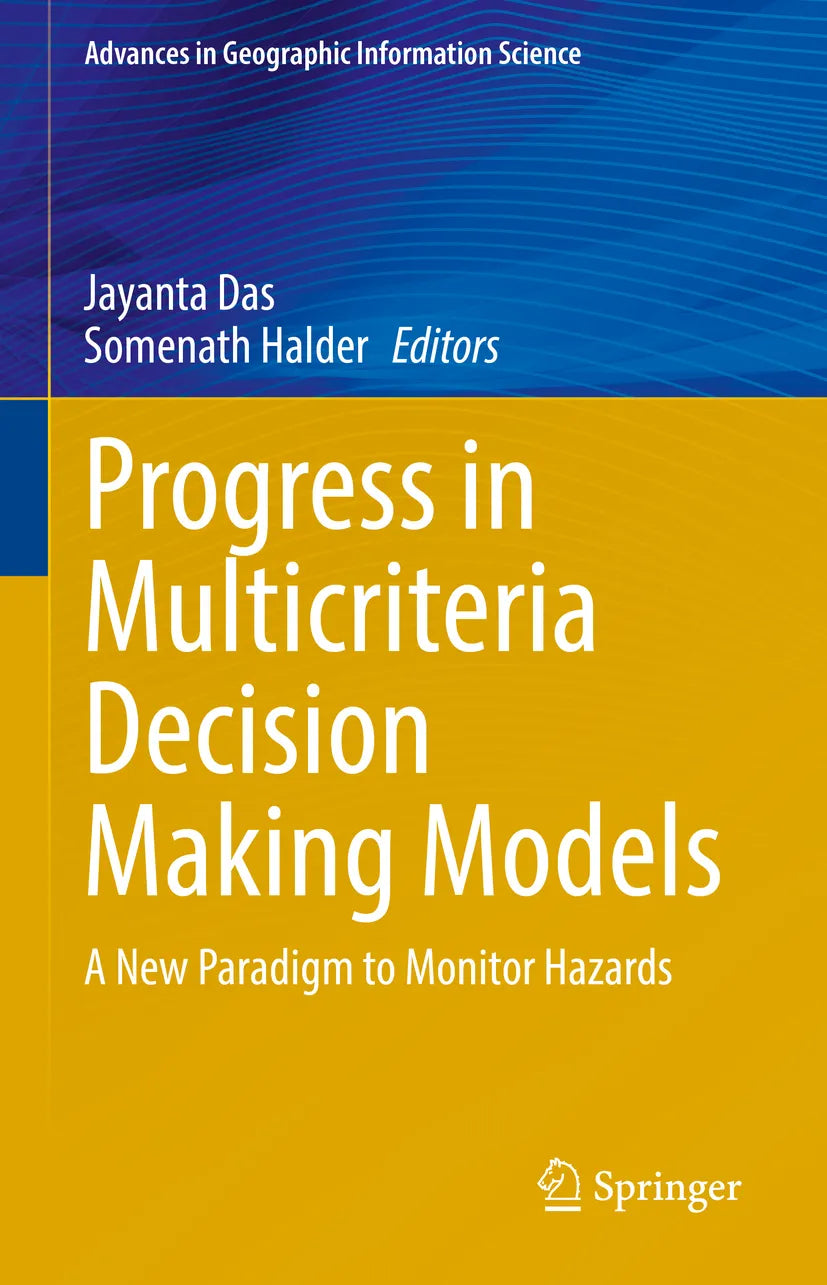
Progress in Multicriteria Decision Making Models
Preis vom Verlag gesenkt
Inhaltsangabe
Part 1: Observatory Persuasion.- Chapter 1: Introduction to Multicriteria Decision Making in Hazard Monitoring.- Chapter 2: Overview of The Holistic Approach and Book Structure.- Part 2: Multicriteria Decision Making Models.- Chapter 3: Multi-Criteria Decision-Making Framework For Identifying Multi-Hazard Risk Hotspots In Coastal Plains of South India.- Chapter 4: Flood Susceptibility Mapping In The Kaljani River Basin: Insights From AHP-PROMETHEE II and AHP Methods.- Chapter 5: Assessment of Landslide Susceptibility Along NH27 and NH627 In Assam, India Using GIS Based Multi Criteria Decision Making and Analytical Hierarchy Process.- Chapter 6: Assessment of Groundwater Potential Zone After Rohingya Rehabilitation Using GIS and Analytic Hierarchy Process (AHP) Techniques In Ukhia Sub-District, Cox’s Bazar.- Chapter 7: GIS-Integrated Landslide Susceptibility Mapping In Teesta River Basin of Darjeeling-Sikkim Himalaya: A Comparative Analysis of Frequency Ratio, Logistic Regression Models, and Analytical Hierarchy Process.- Chapter 8: Spatial Assessment of Urban Resilience In The City District of Lahore Using GIS and Multicriteria Decision-Making Tools.- Chapter 9: Integrated Geomorphological and Hydrological Analysis for Flood Hazard Assessment in the Ngawun River Basin, Ayeyarwady Region, Myanmar.- Chapter 10: Flash Flood Susceptibility and Inundation Mapping Using Shannon's Entropy, Statistical Index, and HEC-RAS.- Part 3: Integrated Multicriteria Decision Making Models.- Chapter 11: An Application of MARCOS, CoCoSo, and GRA MCDM Models In A Hybrid Approach For Landslide Susceptibility Assessment In Wayanad District, Kerala (India).- Chapter 12: Utilizing Multicriteria Decision-Making Techniques For Computing Composite Vulnerability Over A Severely Flood-Prone Multi-Hazard Catchment.- Chapter 13: Flood Susceptibility Modelling of Tripura, India: An Application of Preference Selection Index (PSI) and Geospatial Technology.- Chapter 14: Socio-economic-cum-Physical Vulnerabilities To Riverine Floods Over Large Watersheds: A Comprehensive Framework By Leveraging Shannon Entropy and TOPSIS.- Chapter 15: Enhanced Landslide Susceptibility Assessment along Transport Infrastructures Through Hybrid Ensembled Learning Techniques.- Chapter 16: Advanced Optimization Techniques for Parameter Calibration In The DRASTIC Model: A Multi-Criteria Decision Analysis Approach To Groundwater Vulnerability Assessment.- Chapter 17: A Hybrid Novel Ensemble of Prediction Indices For GIS-Based Flood Susceptibility Zonation.- Chapter 18: GIS-Based Multi-Hazard Risk Analysis and Disaster Risk Reduction Planning Using Coupled Multi-Hazard Assessment Method.- Chapter 19: Hybrid Ensemble Approaches To Landslide Susceptibility Mapping: Fusing Advanced Multi-Criteria-Decision-Making With Machine Learning In Darjeeling Himalayas.- Part 4: Conclusion.- Chapter 20: Shifting Paradigms: The Rise of Multi-Criteria-Decision-Making Models Over Bivariate Statistical Approaches In Hazard Risk Assessment.- Chapter 21: Advancements In Multi-Criteria Decision-Making Models: A New Paradigm for Monitoring Flood Risks In Algeria.-Chapter 22: Usage and Future Path of MCDM For Hazard Monitoring and Risk Assessment.
Produktdetails
- Erscheinungsdatum: 14.06.2025
- Autor/Autorin: Jayanta Das
- Reihe: Earth and Environmental Science (R0)
- Format: E-Book
- Dateiformat: PDF
- Kopierschutz: Wasserzeichen
- Dateigröße: 76.4 MB
- Verlag: SPRINGER
- Sprache: Englisch
- Umfang: 350 Seiten
- ISBN: 9783031892462
- Lieferung: Sofort per Download
- Hinweis: Sofort per Download lieferbar. Kein physischer Versand.
- Kompatibilität: Lesbar auf Geräten und Apps mit PDF-Unterstützung.
Herstellerinformationen
Email: ProductSafety@springernature.com
Wird oft zusammen gekauft