NEU

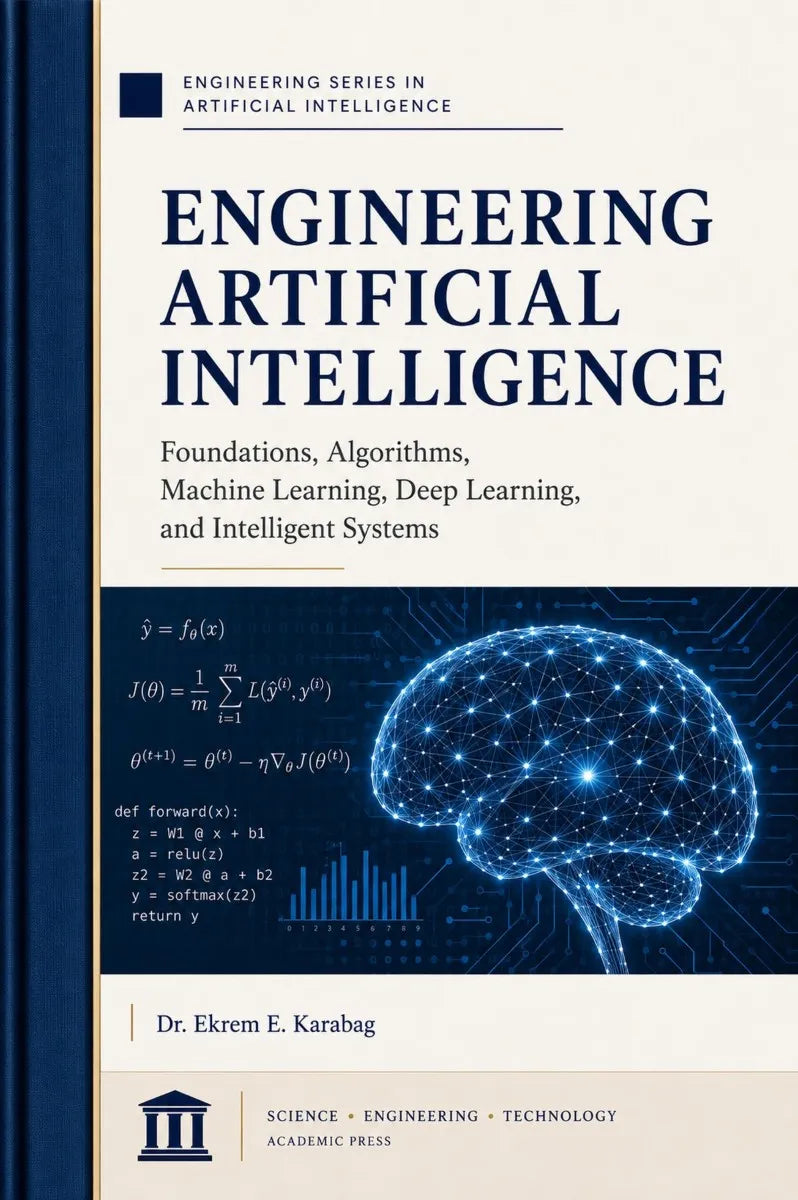
Engineering Artificial Intelligence

Foundations, Algorithms, Machine Learning, Deep Learning, and Intelligent Systems
Angebot€169,99
inkl. MwSt. • Kein physischer Versand
Sofort per Download lieferbar
Ihr Downloadlink kommt direkt per E-Mail.
EPUB: lesbar auf Tolino, Kobo, PocketBook, Smartphone, Tablet und in vielen Lese-Apps.

E-Book
eBook-Format:EPUB
Inhaltsangabe
Artificial Intelligence has evolved from a specialized field of computer science into a foundational engineering discipline shaping how modern technical systems are designed, analyzed, operated, and maintained. Today, AI is applied across aerospace, autonomous systems, telecommunications, automotive engineering, manufacturing, cybersecurity, predictive maintenance, robotics, and Digital Twins. Understanding AI requires more than training models or using Machine Learning libraries. Engineers must understand the complete lifecycle: **Mathematics → Data → Algorithm → Training → Validation → Deployment → Monitoring** A high-performing model may still fail in operation because of incorrect data pipelines, environmental changes, inputs outside the validated domain, latency constraints, misunderstood confidence levels, or inadequate safety mechanisms. This book therefore approaches Artificial Intelligence from an engineering perspective. Its central question is: **How can AI be engineered into reliable technical systems?** The chapters progress from mathematical foundations and Machine Learning to neural networks, Deep Learning, Transformers, Large Language Models, Reinforcement Learning, Generative AI, explainability, safety, and AI Systems Engineering. Theory is connected with engineering applications and practical Python implementations. Particular attention is given to the distinction between **Model Prediction** and **Operational Decision**. In safety-related systems, an AI prediction may require physical validation, redundant sensing, uncertainty analysis, independent monitoring, and deterministic safety logic before operational action is authorized. The book emphasizes five fundamental principles: **Data Quality, Generalization, justified Complexity, Uncertainty awareness, and Verified Operational Authority**. AI capability should never automatically imply operational authority, particularly in high-consequence systems. Written for students, researchers, developers, and engineers, this book bridges **Academic Theory and Engineering Practice**, as well as **AI Algorithms and AI-Enabled Systems**. Technologies will continue to evolve, but the mathematical and engineering principles required to evaluate and deploy AI responsibly will remain essential.
Produktdetails
  • Erscheinungsdatum: 13.08.2026
  • Autor/Autorin: Dr. Emrah Ekrem KARABAG
  • Format: E-Book
  • Dateiformat: EPUB
  • Kopierschutz: DRM-frei
  • Dateigröße: 4.1 MB
  • Verlag: VIA TOLINO MEDIA
  • Sprache: Englisch
  • ISBN: 9783695681259
  • Lieferung: Sofort per Download
  • Hinweis: Sofort per Download lieferbar. Kein physischer Versand.
  • Kompatibilität: Kompatibel mit EPUB-fähigen E-Readern und Apps.
Herstellerinformationen
VIA TOLINO MEDIA

Weitere E-Books von Dr. Emrah Ekrem KARABAG

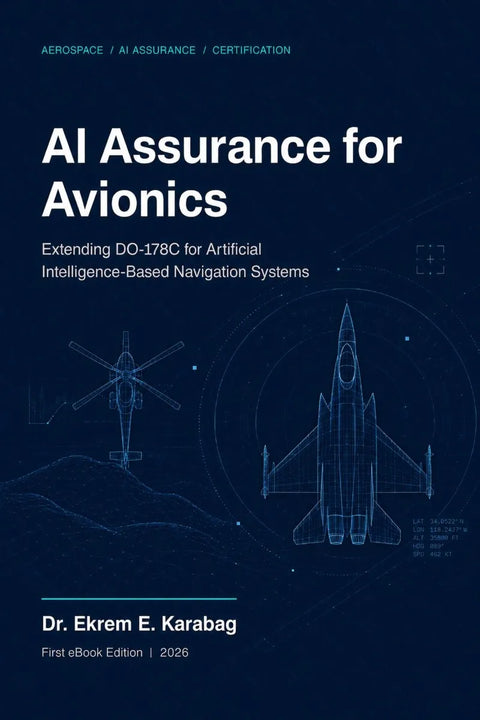
AI Assurance for Avionics

€129,99
The rapid integration of Artificial Intelligence (AI) into airborne systems is transforming the development and certification of avionics software. Existing standards, particularly RTCA DO-178C, provide a mature assurance framework for deterministic software but do not explicitly address learning enabled behavior, dataset governance, model uncertainty, explainability, or runtime adaptation. This paper proposes the Artificial Intelligence Assurance Extension Framework (AIAEF), a structured extension of the DO-178C assurance philosophy for AI-enabled avionics systems. The framework introduces AI specific assurance activities covering AI requirements, dataset assurance, model assurance, runtime assurance, and certification evidence management while preserving compatibility with established certification practices. A certification gap analysis identifies limitations of conventional software assurance when applied to machine learning components. An AI Assurance Maturity Model (AAMM) is also introduced to assess certification readiness. A representative AI-assisted Flight Management System case study illustrates the applicability of the proposed approach. The study concludes that future certification should evolve through an extension of existing assurance principles rather than replacing them, enabling trustworthy integration of AI into safety-critical avionics.
Zum Buch