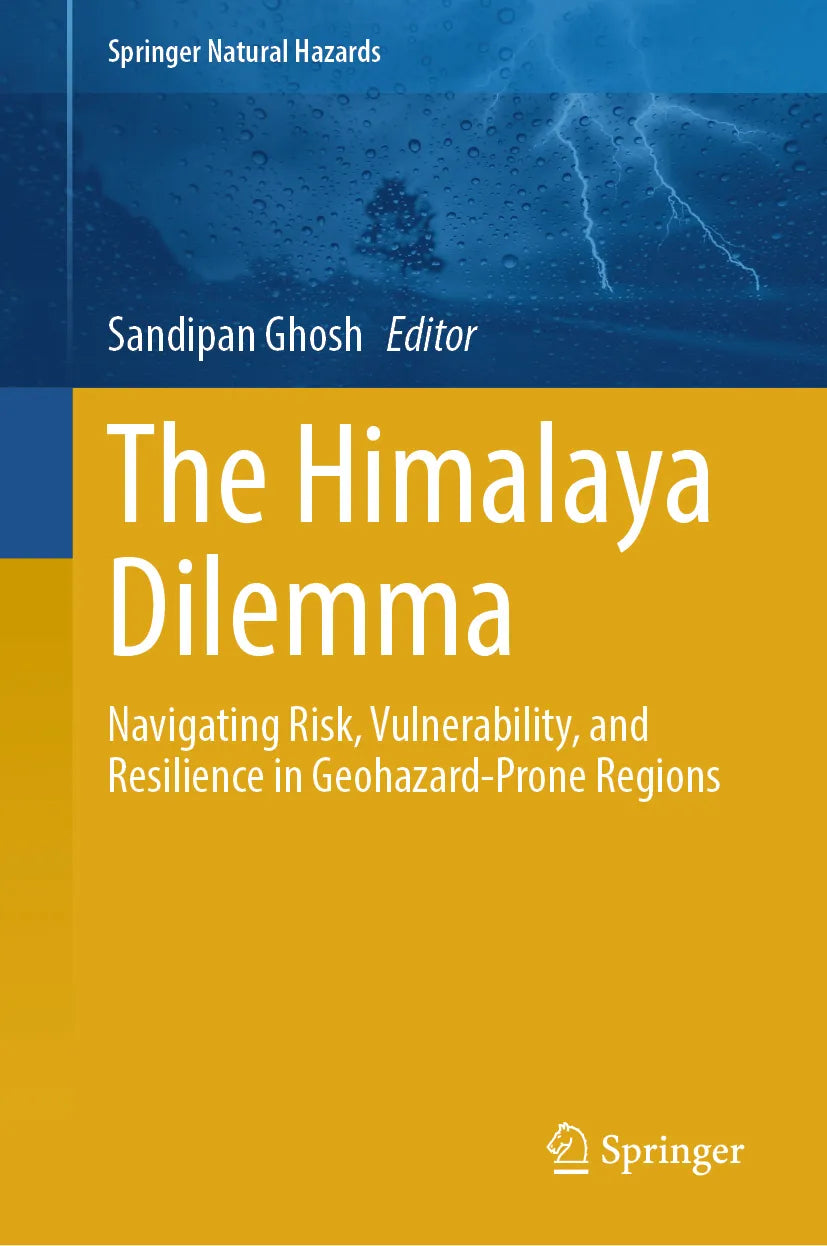
The Himalaya Dilemma

Navigating Risk, Vulnerability, and Resilience in Geohazard-Prone Regions
Angebot€160,49
inkl. MwSt. • Kein physischer Versand
Sofort per Download lieferbar
Ihr Downloadlink kommt direkt per E-Mail.
PDF: lesbar auf Smartphone, Tablet, Computer und in vielen PDF-Apps.

E-Book
eBook-Format:PDF
14 Tage Widerrufsrecht
Sicher bezahlen – auch auf Rechnung mit Klarna
PayPal Klarna Visa Mastercard Maestro Apple Pay Google Pay
Inhaltsangabe

Chapter 1. Living on the Edge of Fragile Majesty: An Introductory Note on Emerging Risks, Hazards and Disasters in the Himalaya.- Part I. Tectonic Hazard and Geomorphic Dilemma.- Chapter 2. Integrated natural hazards in the Himalaya: Insights from the Darjiling-Sikkim Himalaya.- Chapter 3. Quantitative assessment of Relative Tectonic Activity and its implications for seismic hazard analysis in the Pir Panjal and Zanskar Mountain Ranges, Northwest Himalaya.- Chapter 4. Geomorphic Response to the Active Tectonics along a Sub-Himalayan Basin in Kangra Valley, India.-  Chapter 5. Geomorphic assessment of Tectonic influence on the Neora River Basin, Darjeeling- Sikkim Himalaya.- Chapter 6. Himalayan active fault zones: Basic understanding, Review and Concerns.- Part II. Landslide Susceptibility and Hazard Assessment.- Chapter 7. Advances in Understanding Mass Movement and Landslides in the Jammu and Kashmir region, Western Himalaya: An integrated approach from Geomorphological, Geological, and Geotechnical Perspectives.- Chapter 8. Rockfall hazard assessment and mitigation strategies along NH-7, Garhwal Himalaya: An Integrated RHRS and numerical simulation approach.- Chapter 9: Estimating terrain feasibility using BIS code and AHP methods for landslide susceptibility zonation: A case study of Mao-Maram region Manipur.- Chapter 10. GIS-based landslide susceptibility mapping of the Darjeeling Himalaya, India using Frequency Ratio (FR) and Fuzzy Logic (FL) models.- Chapter 11. Mapping Landslide Potential and Assessing Susceptibility in the Darjeeling Himalaya Using GIS and Bivariate Statistics.- Chapter 12. Assessment of Landslide Susceptibility in the Reshi River Basin, West Bengal and Sikkim and Highlighting the Impact of Changing Vegetation Cover.- Chapter 13. Landslide Inventory in parts of Sikkim, Eastern Indian Himalaya: Navigating Spatial and Temporal Patterns.- Chapter 14. Landslide Susceptibility Mapping Along the Critical NH-10 Corridor of the Darjeeling-Sikkim Himalaya: A Comparative Analysis of Analytical Hierarchy Process, Frequency Ratio, and Random Forest Models.

Produktdetails
  • Erscheinungsdatum: 10.10.2025
  • Autor/Autorin: Sandipan Ghosh
  • Reihe: Earth and Environmental Science (R0)
  • Format: E-Book
  • Dateiformat: PDF
  • Kopierschutz: Wasserzeichen
  • Dateigröße: 97.3 MB
  • Verlag: SPRINGER
  • Sprache: Englisch
  • Umfang: 784 Seiten
  • ISBN: 9783031950834
  • Lieferung: Sofort per Download
  • Hinweis: Sofort per Download lieferbar. Kein physischer Versand.
  • Kompatibilität: Lesbar auf Geräten und Apps mit PDF-Unterstützung.
Herstellerinformationen
Springer Nature Customer Service Center GmbH

Email: ProductSafety@springernature.com

Weitere E-Books von Sandipan Ghosh

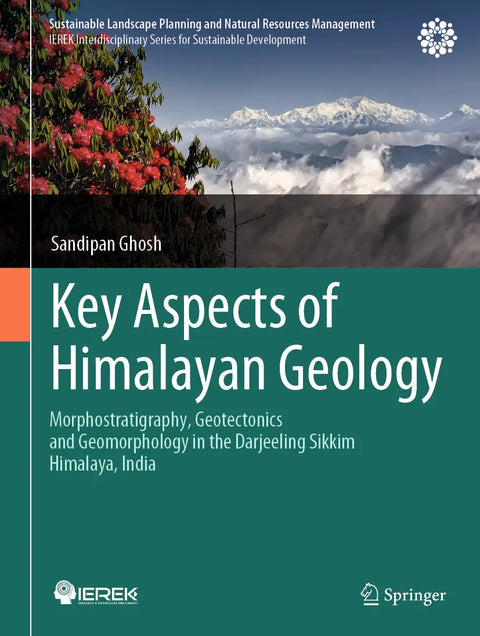
Key Aspects of Himalayan Geology

€171,19

This book serves as a ready reference book for anyone who is interested in the Himalayan geology and apprises the readers with the latest findings. The Himalayan syntaxes compose about one-third of the India-Asia collision zone and encompass a substantial part of the crustal deformation that occurs within the system. The Darjeeling Sikkim Himalaya (DSH) marks the beginning of the Eastern Himalaya, which is the most active orogenic zone, coupled with variable seismicity. It is located between Bhutan to the east and Nepal to the west. In the west, Sikkim shares Kanchenjunga, Earth's third highest mountain, with Nepal, while the ridge line forming Sikkim's eastern border flanks the Yadong-Gulu rift graben. DSH, craved by the river system of Tista, is a large geodynamic laboratory of nature where orogen is still in youth to early mature phases of evolution. Giant-scale endogenous turmoil thoroughly overhauled terrain mostly within the confines of distinct belts or divisions and spectacularly uplifted the terrain in superlative terms. Resting on the foundation of structure, tectonics, geomorphology, stratigraphy, and evolution, the wings of geology extend much further.

Several books, mostly having regional approaches of different scales, have been written on the Himalayan geology with specified intentions. Geological Aspects of the DSH is based on more than direct references and succinctly opens a gateway to variable aspects of mineral study, active tectonics, crustal deformation, tectono-stratigraphy, seismicity, sedimentary geology, palaeontology, landslides, and tectonic geomorphology. The book apprises the readers with the latest findings. The book is addressed to university students for their academic needs and to those who are willing to work in Himalayan terrain. The large number of topics covered in this book is hardly available in any other single book so far. Anyone interested in the geology of the Himalaya might use the book as a quick reference. Different Dimensions of Geology and Geomorphology are described in nine key chapters.

Zum Buch