Teil der Reihe: Economics and Finance (R0)

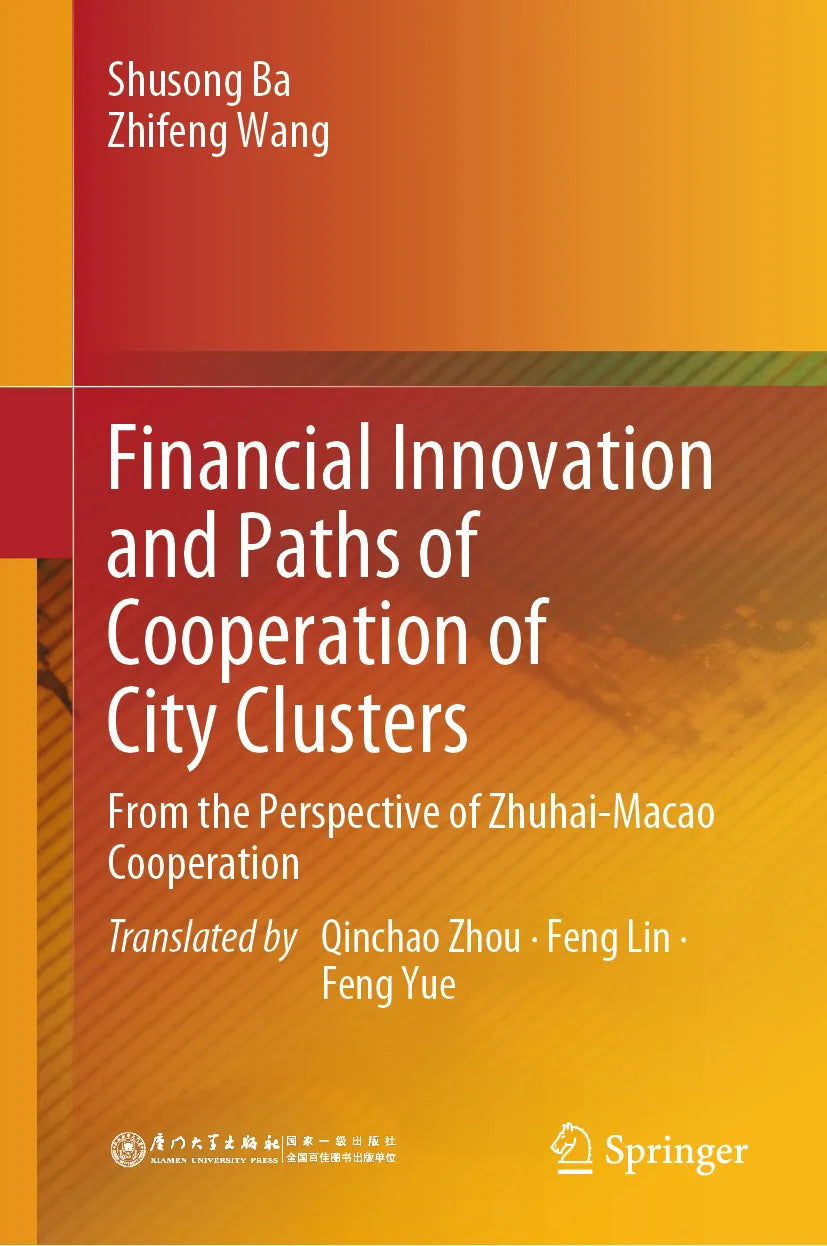
Financial Innovation and Paths of Cooperation of City Clusters

From the Perspective of Zhuhai-Macao Cooperation
Angebot€149,79
inkl. MwSt. • Kein physischer Versand
Sofort per Download lieferbar
Ihr Downloadlink kommt direkt per E-Mail.
PDF: lesbar auf Smartphone, Tablet, Computer und in vielen PDF-Apps.

E-Book
eBook-Format:PDF
14 Tage Widerrufsrecht
Sicher bezahlen – auch auf Rechnung mit Klarna
PayPal Klarna Visa Mastercard Maestro Apple Pay Google Pay
Inhaltsangabe

Theoretical Basis and Practice of Financial Innovation and Cooperation in City Clusters.- Financial Cooperation, Diversified Development and City Cluster Construction.-International Cases of Financial Innovation Cooperation in City Clusters and the Perspective of the Bay Area.- Positioning Strategies of Financial Innovation and Cooperation in City Clusters in the Light of Zhuhai-Macao Cooperation.- Financial Market Innovation, Paths of Cooperation and Practices in Zhuhai and Macao.- Macao Meeting the Needs of the RMB Market in Portuguese-speaking Countries, Providing Room for Innovative Cooperation between Zhuhai and Macao.- Promoting the Mutual Development of Macao's Offshore Financial Market and Zhuhai's Cross-border Financial Market.- Promoting the Convergence of Financial Derivatives Market in Zhuhai and Macao with the Main Focus on Gold and Bulk Commodities.- Cross-border Financial Cooperation as the Main Path to Promote the Transformation of Financial Services in Zhuhai and Macao.- Financial Innovation and Cooperation within City Clusters during the Establishment of Export Insurance Credit System in Macao with the Aid of Zhuhai.- Opportunity of the Zhuhai-Macao Cooperation in Financial Market in Developing Green Finance.- Focusing on the Development of Zhuhai-Macao City Cluster and the Cooperation between China and Portuguese Speaking Countries to Promote Macao's Financial Leasing Industry.- Paths for Macao to cooperate with Zhuhai to promote the development of wealth management.- Etc...

Produktdetails
  • Erscheinungsdatum: 23.08.2025
  • Autor/Autorin: Shusong Ba,Zhifeng Wang
  • Reihe: Economics and Finance (R0)
  • Format: E-Book
  • Dateiformat: PDF
  • Kopierschutz: Wasserzeichen
  • Dateigröße: 9.6 MB
  • Verlag: SPRINGER
  • Sprache: Englisch
  • Umfang: 363 Seiten
  • ISBN: 9789819671984
  • Lieferung: Sofort per Download
  • Hinweis: Sofort per Download lieferbar. Kein physischer Versand.
  • Kompatibilität: Lesbar auf Geräten und Apps mit PDF-Unterstützung.
Herstellerinformationen
Springer Nature Customer Service Center GmbH

Email: ProductSafety@springernature.com

Weitere E-Books von Shusong Ba

RWA Tokenisation in Web 3.0 Era

€106,99

This book strives to comprehensively explain Web 3.0 and tokenization technologies from theory to practice, from concepts to cases, and from opportunities to challenges. Chapter 1 systematically introduces the definition and characteristics of Web 3.0, as well as its impact on traditional investment and financing models, helping readers quickly establish a basic understanding of Web 3.0. Chapters 2, 3, and 4 serve as the theoretical foundation, delving into the blockchain technology principles underpinning tokenization and the economic theories embedded within, thereby solidifying the necessary knowledge base for readers. On the practical side, Chapters 5 and 6, as typical applications, focus on dissecting the two most core models in tokenization—the various types of RWA and stablecoins. The RWA model innovatively proposes ways to digitize and tokenize RWAs, significantly expanding the application scenarios and boundaries of tokenization. Stablecoins, as a bridge connecting the digital and real worlds, play a crucial role in promoting the prosperity of the tokenization ecosystem. Through detailed case studies and thorough analysis, this book enables readers to clearly understand how tokenization operates and the pathways to its implementation. However, the development of tokenization is not without obstacles; it also faces numerous risks and challenges. Chapters 7 and 8 adopt a cautious approach to discuss potential issues in regulation and social impact, objectively analyzing the resistances and limitations it faces, and proposing strategies and development recommendations. Only in this way can the development of tokenization become healthier and more sustainable.
Zum Buch