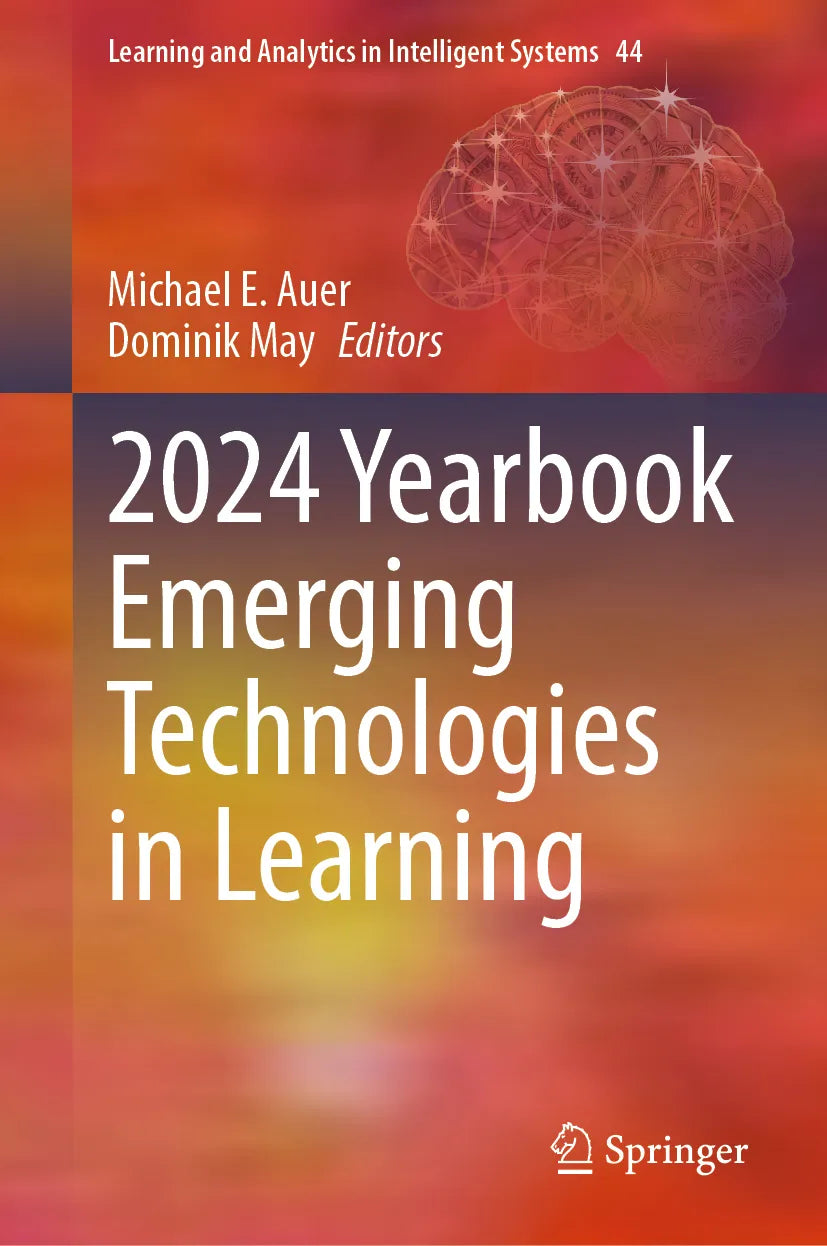
2024 Yearbook Emerging Technologies in Learning

Angebot€299,59
inkl. MwSt. • Kein physischer Versand
Sofort per Download lieferbar
Ihr Downloadlink kommt direkt per E-Mail.
PDF: lesbar auf Smartphone, Tablet, Computer und in vielen PDF-Apps.

E-Book
eBook-Format:PDF
Inhaltsangabe

1.Exploring The Implementation and Challenges of The GPT Language Model in STEM Higher Education: A Systematic Literature Review.- 2.Early Findings from Pilots in AI-Driven Education: Effects of AI-Generated Courses and Videos on Learning and Teaching.- 3.Adapting to Artificial Intelligence-Related Specializations in Higher Education: Evidence from Azerbaijan.- 4.JavaTutorBot: An Interactive Learning Chatbot with Generative AI for Programming.- 5.Generative AI, a New Model for Knowledge Memorization. The Specific Case of the International Telematic University UNINETTUNO.- 6.Text Mining Analytics to Facilitate University Students with Hybrid Learning Model.- 7.Implementation Of A Templated-Based Natural Language (NLG) Tool For The Creation of Educational Assignments In Higher Education.- 8.Towards an Optimized Adaptive Learning Model: A Comparative Study of ACO and PSO for Generating Optimal Learning Paths in MOOCs.- 9.Breaking the MOOC Barrier- A Bloom’s Taxonomy Driven Approach to Enhance Feedback Analysis with Few-Shot Learning and LLMs to Optimize Course Design.- 10.Understanding students’ self-assessment: How does it matter to their blended learning?.- 11.Redesigning a Project-Based Learning Course for Successful Hybrid Online Delivery.- 12.Pedagogical Infrastructures of MOOC Design for Employees Training in Leading Organizations.- 13.Can The Game-Based Exam Come? Knowledge Assessment in the Virtual Environment.- 14.Virtual Environments: Features of CoSpaces Edu Involvement.- 15.A Remote Workshop on IoT-Based Monitoring of Robotic Production Systems.- 16.How to Use the Three faces of Chemical Knowledge — Experiences, Models, and Visualizations — in Creating Educational Animations.- 17.Enhancing Science Education Through Remote Laboratories: Concrete Tasks And Applications.- 18.Methodological Strategy by Competencies in the First Semester of the Systems and Electronics Engineering Program.- 19.Modelling Attitudes toward Application of Statistics among Students.- 20.Using a Learning Analytics Model to Predict At-Risk Students in an Introductory Software Programming Course.- 21.Analysis of the ERA-RSI Nomophobia Scale for Mexican Undergraduate Students.- 22.Influence of Entrepreneurial Education on Students' Entrepreneurial Intent: Mediating Roles of Entrepreneurial Self-Efficacy and Mindset.- 23.Education in the Technological Age - The Conflux of Technology, Education, and Science.- 24.Empowering Education: How the Smart Education Concept Improves English Learning and Bridges Urban-Rural Gaps - A Case Study in College A.- 25.Exploring Knowledge Acquisition Dynamics in Small Student Groups: A Case Study.- 26.Development of Higher Order Thinking Learning Module based on Scaffolding and Guided Discovery Approaches.- 27.Implementation Of Interdisciplinary Relations Of The Educational Process In Teaching PLC Programming.

Produktdetails
  • Erscheinungsdatum: 29.05.2025
  • Autor/Autorin: Michael E. Auer
  • Reihe: Intelligent Technologies and Robotics (R0)
  • Format: E-Book
  • Dateiformat: PDF
  • Kopierschutz: Wasserzeichen
  • Dateigröße: 27.1 MB
  • Verlag: SPRINGER
  • Sprache: Englisch
  • Umfang: 500 Seiten
  • ISBN: 9783031803888
  • Lieferung: Sofort per Download
  • Hinweis: Sofort per Download lieferbar. Kein physischer Versand.
  • Kompatibilität: Lesbar auf Geräten und Apps mit PDF-Unterstützung.
Herstellerinformationen
Springer Nature Customer Service Center GmbH

Email: ProductSafety@springernature.com

Weitere E-Books von Michael E. Auer

Innovation via Collaborative Learning in Engineering Education

€266,43

We are currently witnessing a significant transformation in the development of education on all levels and especially in post-secondary and higher education. Especially, the current explosion of AI tools, is challenging teaching practices maintained for centuries.

The ICL2025 together with the 54th IGIP Conference, which took place in Budapest, Hungary, between from 01-03 October 2025, was the perfect place where current trends in Higher Education were presented and discussed.

Nowadays the ICL conferences are a forum of the exchange of relevant trends and research results as well as the presentation of practical experiences in learning and Engineering Pedagogy. In this way we try to bridge the gap between ‘pure’ scientific research and the everyday work of educators.

This volume contains papers from the following Special Sessions:

·         Special Session: Accessibility, Learning and Technologies

·         Special Session: AI in HE from a Pedagogical Perspective

·         Special Session: Entrepreneurship in Engineering Education 2025

·         IPW Special Session: Interactive and Collaborative Learning with focus on Artificial Intelligence and Innovative Technologies in Engineering Education

·         Special Session: Reimagining Engineering and Applied Curriculum for Transformation in Africa

·         Special Session: To the Roots of Engineering Pedagogy

·         Special Session: Virtual Laboratories and Makerspaces

Interested readership includes policy makers, academics, educators, researchers in pedagogy and learning theory, schoolteachers, learning industry, further and continuing education lecturers, etc.
Zum Buch