

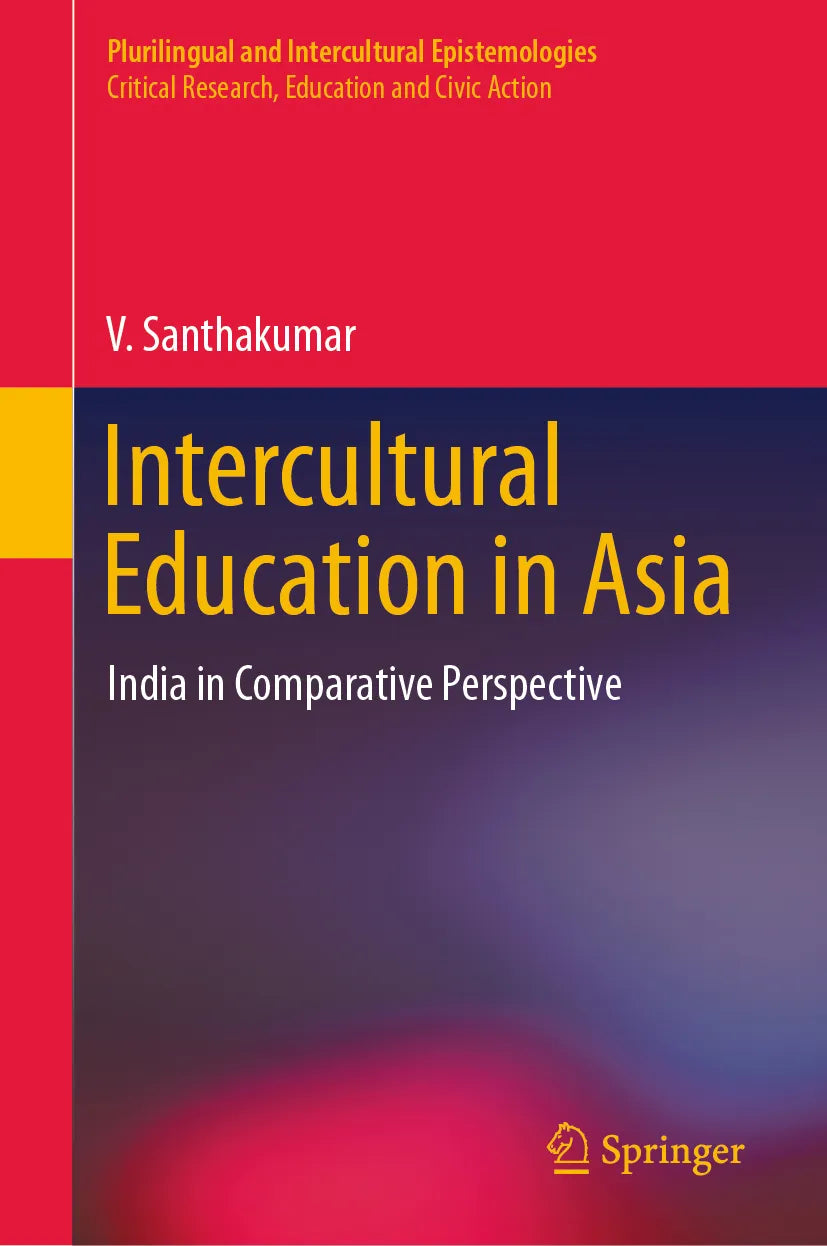
V. Santhakumar
Santhakumar Velappan Nair is a former professor and currently a visting faculty at Azim Premji University in Bangalore, India. Santhakumar’s academic interest lies in the inter-linkages between development and education, and the ways of shortening the ‘distance’ between population groups so as to mitigate the ‘development differences’ between them. He has carried out a number of experiments that connect teaching and research in university to the practice in the domains of development and education. His recent publications in the domain of education include "Shephard, K., & Santhakumar, V. (2023). Universities with a Social Purpose: Intentions, Achievements and Challenges. Springer" and `Santhakumar, V., Gupta, N., & Sripada, R. (2016). Schooling for All in India: Can We Neglect the Demand? Oxford University Press'.
 Erschienen am 17.05.2026
Land Restoration: A Rational, Grounded and Pragmatic Approach
E-Book
€149,79

Aus denselben Regalen
Ähnliche Autorinnen und Autoren
Wer V. Santhakumar liest, findet hier Autorinnen und Autoren aus Pädagogik.
- Leona Sprotte-HuberPädagogik
- Sabine SeichterPädagogik
- Michael Borg-LaufsPädagogik
- Michael MatznerPädagogik
- Kenneth RösenPädagogik
- Johannes BaumannPädagogik
- Marcus EckertPädagogik
- Hans-Werner WahlPädagogik