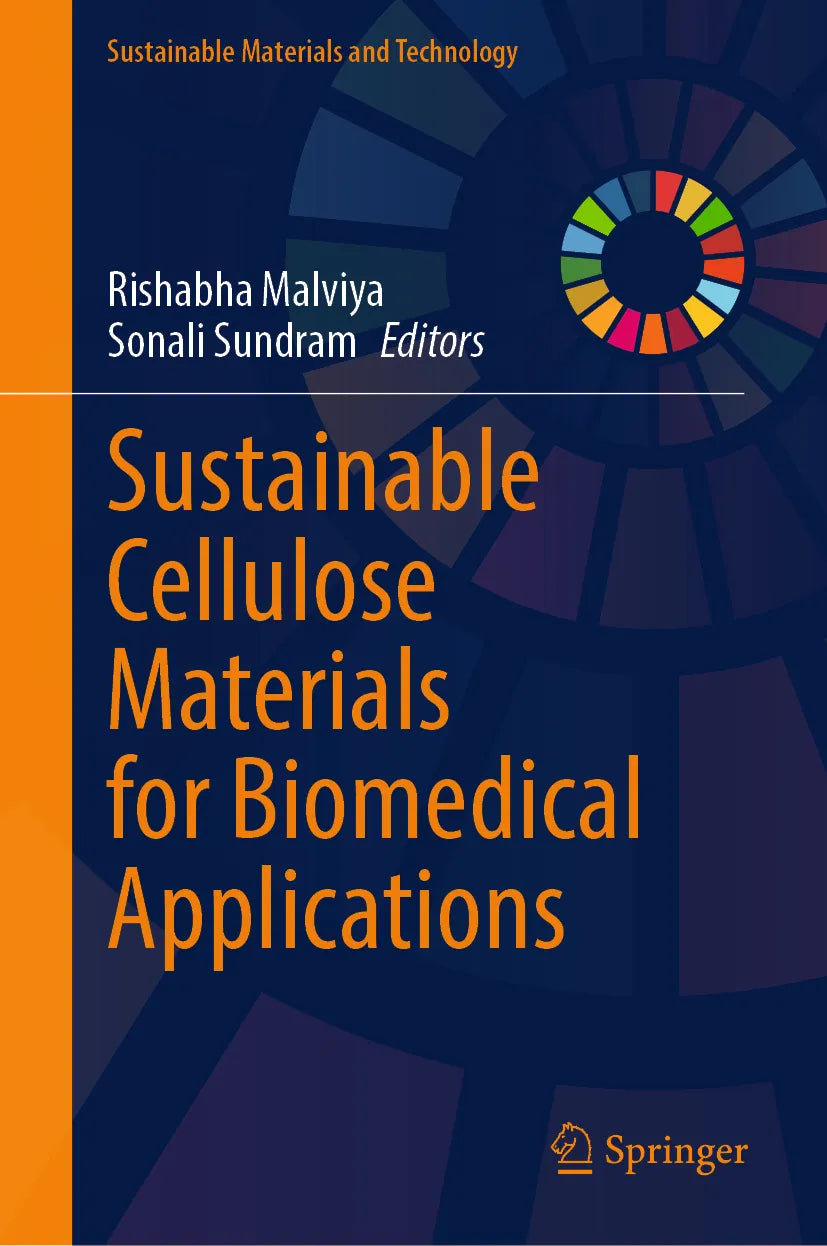
Sustainable Cellulose Materials for Biomedical Applications

Angebot€192,59
inkl. MwSt. • Kein physischer Versand
Sofort per Download lieferbar
Ihr Downloadlink kommt direkt per E-Mail.
PDF: lesbar auf Smartphone, Tablet, Computer und in vielen PDF-Apps.

E-Book
eBook-Format:PDF
Inhaltsangabe

Introduction to cellulose and Its derivatives.- Cellulose and its Derivatives: Exploring Structure and Properties.- Cellulose Derivatives: Chemical Modification and Biomedical Research Applications.- Safety and Biocompatibility of Cellulose-Based Materials.- Fundamentals and Applications of Cellulose Polyelectrolyte Complexes.- Cellulose and its Derivatives: Research Developments, New Technologies.- Design, Characteristics, and Biomedical Applications of Cellulose-Based Hydrogels.- Microbial cellulose: Synthesis and applications.- Green Approaches to Cellulose Modification: Sustainable Biomedical Solutions.- Advanced Application of cellulose derivatives.- Development of dosage form using cellulose-based material.- Cellulose-based material as antibacterial agent.- Utilizing Cellulose-based hybrid smart hydrogel for tissue engineering.- Cellulose material for ophthalmic tissue repair.- Artificial blood vessels manufacturing with the aid of Cellulose-based materials.- Cellulosic biomaterials for regeneration and replacement of vasculature.- Cellulosic scaffold for nerve cell and stem cell culturing.- Biomedical Applications of Nanocellulose.- Cellulose role in Scaffolds for Bone and Cartilage Regeneration.- Cellulose-based medical devices.- Surgical supplies and sutures made of cellulose.- Cellulose in 3D Printing of Biomedical Devices.- Safety and Biocompatibility of Cellulose-Based Materials.- Hydrogels Based on Cellulose for Controlled Drug Release.- Systems Based on Cellulose for Protein and Gene Delivery.- Biosensors and Diagnostic Platforms Based on Cellulose.- Wound Healing and Cellulose-Based Hemostatic Agents.- Cellulose and Electroactive Materials for Bioelectronics.- Cellulose-Based Implants and Tissue Substitutes.- Challenges and Future Prospects for Cellulose-Based Biomedical Applications.

Produktdetails
  • Erscheinungsdatum: 31.10.2025
  • Autor/Autorin: Rishabha Malviya
  • Reihe: Chemistry and Material Science (R0)
  • Format: E-Book
  • Dateiformat: PDF
  • Kopierschutz: Wasserzeichen
  • Dateigröße: 32.9 MB
  • Verlag: SPRINGER
  • Sprache: Englisch
  • Umfang: 726 Seiten
  • ISBN: 9789819699049
  • Lieferung: Sofort per Download
  • Hinweis: Sofort per Download lieferbar. Kein physischer Versand.
  • Kompatibilität: Lesbar auf Geräten und Apps mit PDF-Unterstützung.
Herstellerinformationen
Springer Nature Customer Service Center GmbH

Email: ProductSafety@springernature.com

Weitere E-Books von Rishabha Malviya

Advances and Insights into AI-Created Disability Supports

€53,49

This book offers a comprehensive exploration of the convergence of generative artificial intelligence and disability assistance, seeking to highlight the revolutionary capabilities of AI technology in improving the lives of those with disabilities. Given the swift progression of AI capabilities, it is vital to comprehend how these innovations might be used to foster inclusivity, enhance accessibility, and deliver personalised assistance. This book aims to connect advanced research and practical applications with the specific requirements of individuals with disabilities.

The book offers a detailed investigation of generative AI as an assistive tool for individuals with disabilities, encompassing fundamental principles of generative AI, case studies of effective applications, and critical analyses of ethical considerations and societal implications. The book provides a comprehensive analysis of several applications of generative AI for individuals with disabilities across various domains. Examples of generative AI applications encompass AI-assisted communication tools for individuals with speech problems, customised educational platforms for students with learning challenges, virtual reality settings that improve social engagement for individuals on the autistic spectrum and various others. These applications demonstrate how generative AI may improve accessibility and empower individuals by personalising experiences to their individual requirements.

Zum Buch