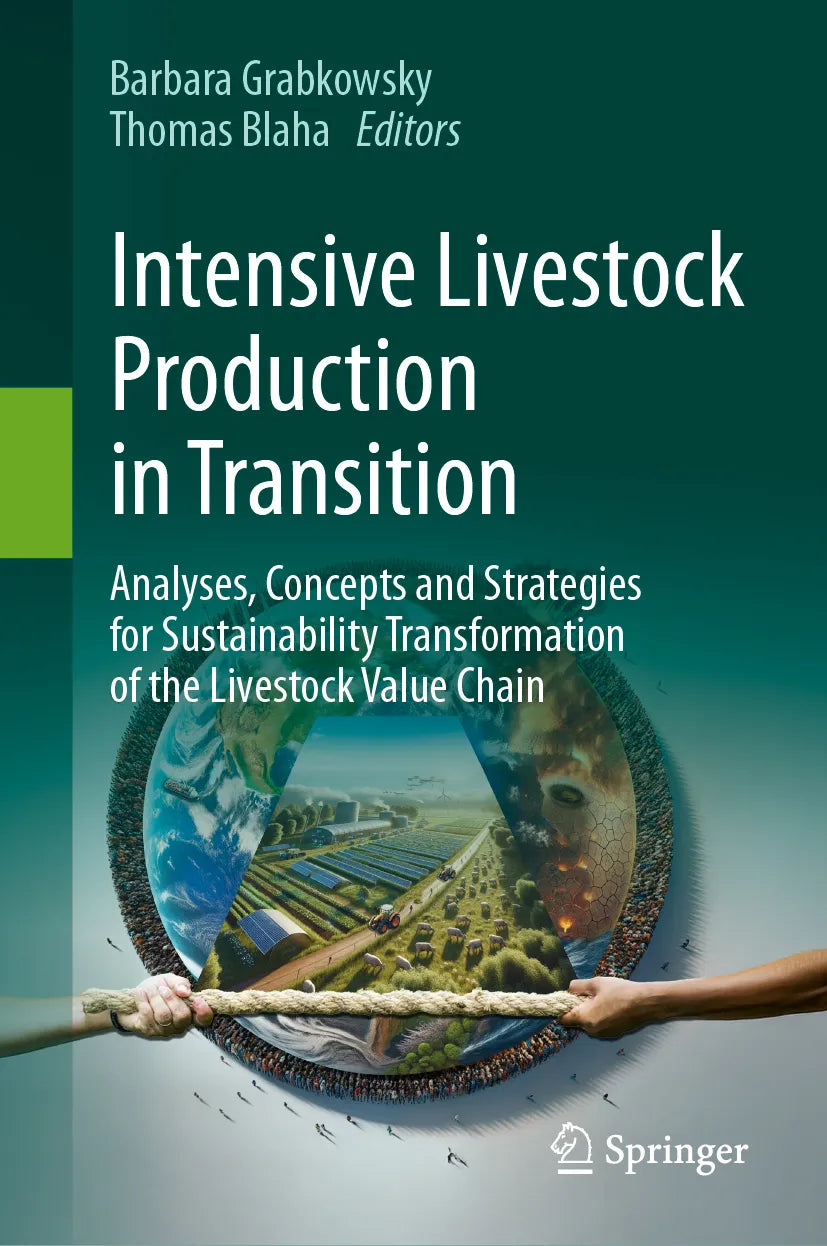
Teil der Reihe: Biomedical and Life Sciences (R0)
Intensive Livestock Production in Transition
Inhaltsangabe
Chapter 1: Introduction.- Chapter 2: Changing the Goal from Maximizing “Financial” to Optimizing “Sustainable” Return on Investment for the Future of Livestock and Food Production, People, Ecosystems, and the Planet.- Chapter 3: Intensive livestock production: mechanisms and structures.- Chapter 4: Ecological footprint of livestock production.- Chapter 5: The transformation of livestock production in a globalised world – barriers and opportunities.- Chapter 6: Public ethical discourse about livestock production.- Chapter 7: Systemic complexity makes the transformation a "wicked” problem.- Chapter 8: Improving Animal Welfare and Animal Health.- Chapter 9: Economic and political competitive constraints to improving animal welfare.- Chapter 10: Introduction - The Relevance of maintaining the highest possible food safety standards in the transformation process.- Chapter 11: The Relevance of the highest possible biosecurity systems in the transformation process - Conclusion.- Chapter 12: Transformative change towards responsible water management and sustainable livestock production.- Chapter 13: Potential of functional plant diversity for climate resilience of grasslands.- Chapter 14: Upcycling food loss and waste to animal feed is essential for a circular and sustainable food system.- Chapter 15: By-products from agriculture and agro-food industry for livestock nutrition.- Chapter 16: Future livestock systems based on circularity.- Chapter 17: Specificities, changes and challenges of pig production in France.- Chapter 18: A dichotomous approach to extensive and intensive animal farming.- Chapter 19: Potential of digital technologies for transforming livestock production.- Chapter 20: Making sustainability our business: Entre- and intrapreneurial activities to develop new pathways for a sustainable agricultural sector.- Chapter 21: Transformation-Literate Citizens: Advancing Sustainable Development through Education.- Chapter 22: Consumer-oriented perspectives for sustainable animal products and consumption.- Chapter 23: The consumer as a change agent in the green transition of the food sector.- Chapter 24: The Role of Sustainable Food Labels in Transforming the Food System.- Chapter 25: Future requirements for animal husbandry structures.- Chapter 26: Areas of responsibilities (who has to take responsibility for what) for the well-being of food animals.- Chapter 27: How to govern the transition to sustainable animal husbandry in high-income open economies?.- Chapter 28: The Transformation Framework: Lessons Learned, Integrating Ecological Limits, Systemic Drivers, and Economic Viability.- Chapter 29: The transition of agri-food systems is a task for society as a whole.- Chapter 30: Multi-Stakeholder Governance in Agricultural Policy: Insights from the Commission on the Future of Agriculture in Germany.- Chapter 31: Sustainable transformation of intensive livestock production systems IS NOT a return to “Old McDonald’s farm”.
Produktdetails
- Erscheinungsdatum: 21.11.2025
- Autor/Autorin: Barbara Grabkowsky
- Reihe: Biomedical and Life Sciences (R0)
- Format: E-Book
- Dateiformat: PDF
- Kopierschutz: Wasserzeichen
- Dateigröße: 34.1 MB
- Verlag: SPRINGER
- Sprache: Englisch
- Umfang: 530 Seiten
- ISBN: 9783031978722
- Lieferung: Sofort per Download
- Hinweis: Sofort per Download lieferbar. Kein physischer Versand.
- Kompatibilität: Lesbar auf Geräten und Apps mit PDF-Unterstützung.
Herstellerinformationen
Email: ProductSafety@springernature.com
Wird oft zusammen gekauft