Teil der Reihe: Education

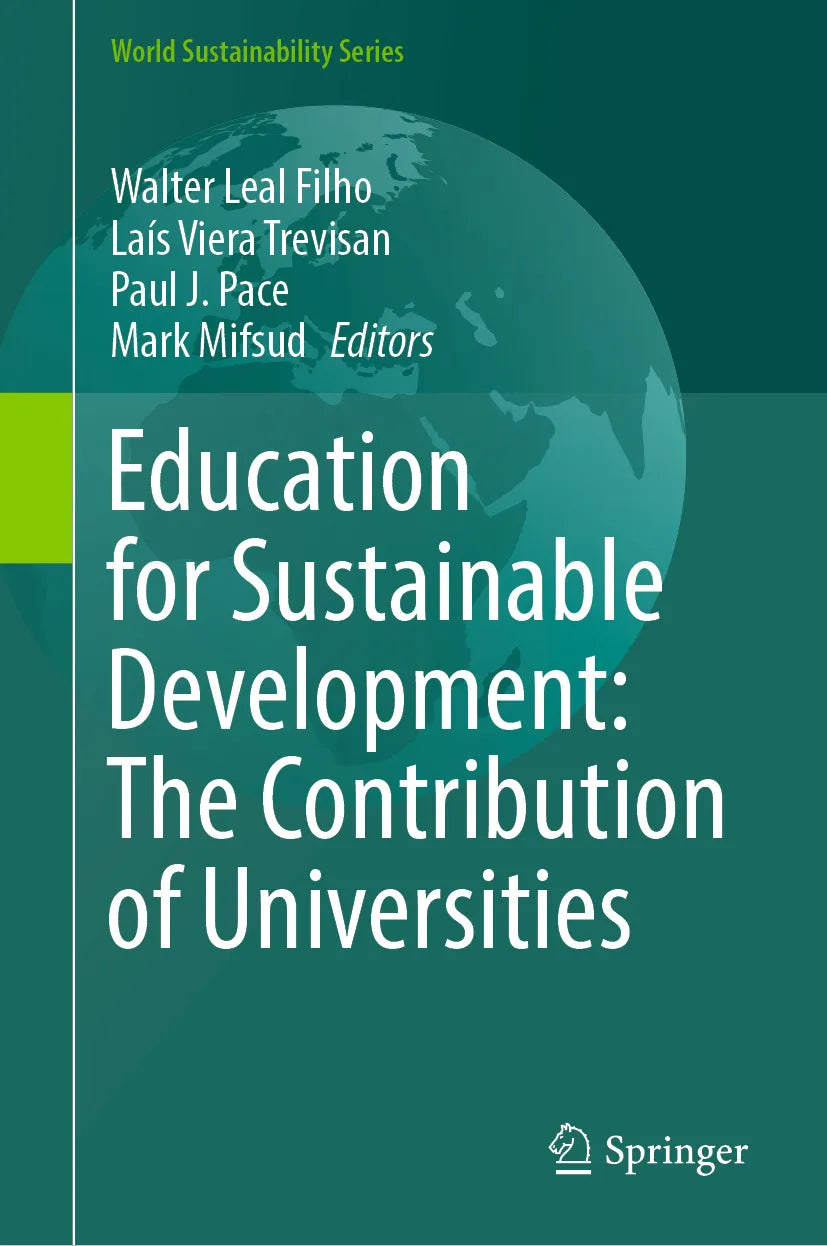
Education for Sustainable Development: The Contribution of Universities

Angebot€160,49 Regulärer Preis€171,19
-6%

Preis vom Verlag gesenkt

inkl. MwSt. • Kein physischer Versand
Sofort per Download lieferbar
Ihr Downloadlink kommt direkt per E-Mail.
PDF: lesbar auf Smartphone, Tablet, Computer und in vielen PDF-Apps.

E-Book
eBook-Format:PDF
✓14 Tage Widerrufsrecht
✓Sicher bezahlen – auch auf Rechnung mit Klarna
PayPal Klarna Visa Mastercard Maestro Apple Pay Google Pay
Inhaltsangabe

As we confront the daunting challenges of the 21st century—climate change, social inequality, resource depletion, and the loss of biodiversity—the role of education has emerged as a pivotal force in driving transformative change. "Education for Sustainable Development: The Contribution of Universities" is a response to this urgent call for a reimagined educational landscape, one that empowers current and future generations to navigate and address the complexities of sustainability.

This book seeks to outline universities' critical role as catalysts for sustainable development. As centres of knowledge creation, innovation, and community engagement, universities possess the unique ability to influence not only individual lives but also societal norms and practices. They are uniquely positioned to integrate sustainability into their curricula, research agendas, and outreach efforts, thus fostering a culture of sustainability that permeates all aspects of academic life.

The need for Education for Sustainable Development (ESD) has never been clearer. By emphasising sustainability in higher education, we can raise awareness among students and faculty, inspiring them to become informed and engaged global citizens. This book serves as a comprehensive resource, offering insights, best practices, and real-world examples of how universities around the globe are advancing the principles of ESD.

Within this book, the readers will find a rich tapestry of ideas and strategies designed to encourage institutions to embrace sustainability in a holistic manner. From innovative teaching methods to collaborative community partnerships, this collection reflects the diversity of approaches being implemented in universities today. It is our hope that the experiences shared will serve as a source of inspiration for educators, administrators, and policymakers.

Ultimately, this book stands as a testament to the belief that education is a powerful tool for creating a more sustainable and equitable world. By fostering a deep understanding of sustainability and its interconnected dimensions, we can equip students with the knowledge and skills necessary to tackle the pressing issues we face. Together, through a collective commitment to Education for Sustainable Development, we can cultivate a better future for generations to come.

Produktdetails
  • Erscheinungsdatum: 01.07.2025
  • Autor/Autorin: Walter Leal Filho
  • Reihe: Education (R0)
  • Format: E-Book
  • Dateiformat: PDF
  • Kopierschutz: Wasserzeichen
  • Dateigröße: 16.8 MB
  • Verlag: SPRINGER
  • Sprache: Englisch
  • Umfang: 488 Seiten
  • ISBN: 9783031869853
  • Lieferung: Sofort per Download
  • Hinweis: Sofort per Download lieferbar. Kein physischer Versand.
  • Kompatibilität: Lesbar auf Geräten und Apps mit PDF-Unterstützung.
Herstellerinformationen
Springer Nature Customer Service Center GmbH

Email: ProductSafety@springernature.com

Weitere E-Books von Walter Leal Filho

Curriculum Development for Sustainable Development

€171,19

Chapter 1. Envisioning Eco-centric Frameworks for Curriculum Development and Implementation in the Anthropocene.- Chapter 2. Envisioning Eco-centric Frameworks for Curriculum Development and Implementation in the Anthropocene.- Chapter 3. Pedagogy for sustainable futures: Integrating culture for comprehensive sustainability learning.- Chapter 4. Artificial Intelligence and Sociodigital Futures: Curricular Experiences for Sustainable and Immersive Education.- Chapter 5. Embedding Sustainability: Case Studies of Successful Curriculum Models for a Greener Future.- Chapter 6. Integrating sustainability teaching in higher education in South Africa: critical reflections.- Chapter 7. Scaffolding Sustainability Curriculum Within and Across Institutions: A Cautionary Tale.- Chapter 8. Walking the Sustainability Talk: The Case of a Higher Education Institution.- Chapter 9. Policy Innovations for Sustainability Education: Challenges, Opportunities and Lessons from Namibia and Ghana in Green Curriculum Development.- Chapter 10. Integrating Education for Sustainable Development in Teacher Training Curricula: A Comparative Analysis of Finland and Ghana.- Chapter 11. Co-developing European curricula and resources for sustainability (teacher) education: the case of Teacher Academy Project-Teaching Sustainability.- Chapter 12. Investigating Teacher Turnover in Namibia’s Education System: Implications for Sustainable Curriculum Development in the Kandjimi-Murangi Circuit.- Chapter 13. The pond as an educational context for early childhood science and sustainability learning.- Chapter 14. Developing a Scalable Online Ecology Course with 4DEE.- Chapter 15. Serious Games as Pedagogical Practice(s) for Teaching Sustainability.- Chapter 16. Sustainable Development in Practice: Applying a Learner-Centred Approach to Sustainable Development e-Curricula.- Chapter 17. How to Make a Difference: Capacities and Processes for Teaching Community Engagement in Higher Education.- Chapter 18. Envisioning Pathways for Building Sustainable Communities: A University Coursework Research Agenda.- Chapter 19. From theory to practice: rethinking the sustainable design curriculum in Mexico through complexity and participation.- Chapter 20. Teaching Sustainability in Interior Design: Interdisciplinary Approaches and Pedagogical Strategies from a Portuguese Higher Education Context.- Chapter 21. Integrating Design, Project Management, and People Management in Sustainable and Innovative Learning Processes.- Chapter 22. Advancing Sustainability Education through Capstone Curriculum.- Chapter 23. Integrating Sustainability and Practice into Engineering Education: An Interdisciplinary Curriculum Model in Côte d’Ivoire.- Chapter 24. Subnational Climate Planning Education: Meeting the Needs of the Coalition for High Ambition Multilevel Partnerships through Penn State’s Local Climate Action Program.- Chapter 25. Educating for Environmental Character: Findings from a University Course in Sustainability Studies.

Zum Buch