Teil der Reihe: Earth and Environmental Science (R0)
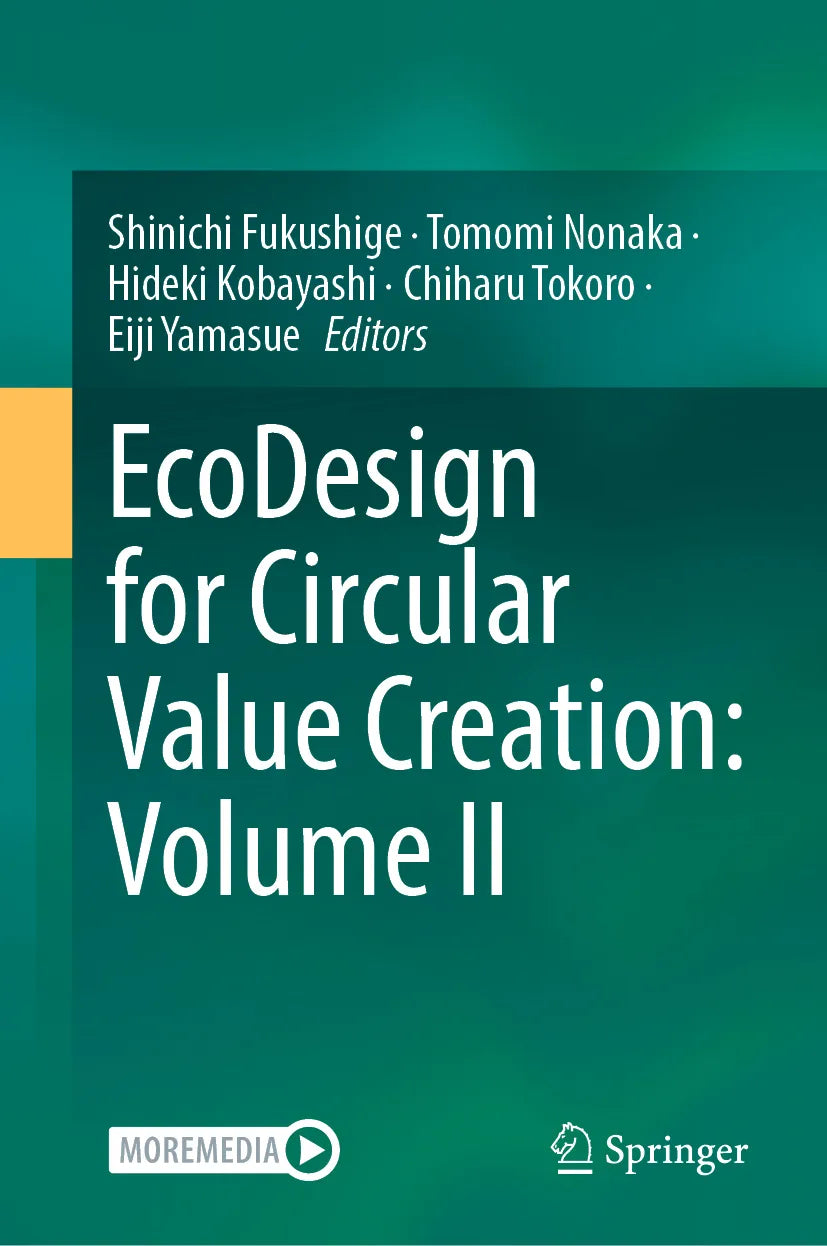
EcoDesign for Circular Value Creation: Volume II
Inhaltsangabe
Chapter 1. CLIMATE CHANGE AND DISASTER RISK REDUCTION EDUCATION IN PRIMARY SCHOOLS: A CASE STUDY IN THUA THIEN HUE PROVINCE, VIETNAM.- Chapter 2. Design for long-term reuse in sustainable design education.- Chapter 3. Cultural Practice for Sustainability: Narratives from Zero Waste Life Series by NHK World.- Chapter 4. Design of rice koji fermentation kit to promote environmental education and microorganism awareness in Japan.- Chapter 5. Challenges in engineering education for sustainable product development – Insights from practice.- Chapter 6. Changes in High School Students' Interest in Environmental and Social Issues as an Effect of Futurability Education.- Chapter 7. Unintended Consequences in the Transition to FMCG reuse: “I do not think I ever will not” use Single-Use Products.- Chapter 8. Food and nutrition security toward sustainable food chain in Japan.- Chapter 9. Repurposing Lithium-ion batteries for the Household Context: An Industry Investigation in Norway.- Chapter 10. A Study on Extracting Necessary Parameters for Expanding the Utilization Rate of Used Automobile Parts Based on Supply-Demand Analysis.- Chapter 11. Is it possible to reduce the number of today’s thermoplastics? – An investigation of the Swedish plastic industry.- Chapter 12. From Frugal Solutions to Reverse Innovation: A Knowledge-Based Perspective.- Chapter 13. Quantifying the carbon saving potential of two sensor-based smart city services regarding street lighting and waste management.- Chapter 14. Airflow Heat and CO2 Balance in Detached Houses: A Simulation Based on Insulation Leakage, Ventilation, and Occupancy of an Indoor Environment.- Chapter 15. Evaluation of heatstroke risk, environmental impact, and cost of hydrocarbon refrigerant (GF-08) air conditioning use in residential homes integrated with combined photovoltaic power generation and battery storage.- Chapter 16. Trade-off analysis between CO2 reduction and waste increase associated with solar photovoltaic installations.- Chapter 17. Life Cycle Assessment on Decommissioning of Nuclear Power Plant - a Study on First Nuclear Power Plant.- Chapter 18. Environmental impact assessment of battery swapping service for electric vehicles.- Chapter 19. Facility location problem of stationary and mobile hydrogen refueling stations considering transport risk for hydrogen.- Chapter 20. Model-based analysis of the dynamic capacity ramp-up of closed-loop supply chains for lithium-ion batteries in Japan and Germany.- Chapter 21. Evaluation of the "Shift" and Improve" Strategies in Achieving Sustainable Urban Transportation.- Chapter 22. Environmental and economic assessment towards the utilization of CCUS technology in waste incineration facilities.- Chapter 23. Automation approach for Life Cycle Assessment integrated data and mapping quality assessment.- Chapter 24. Environmental evaluation of remanufactured automotive parts – Comparative LCAs of five product groups.- Chapter 25. Implementing Simplified Life Cycle Assessments in Product Development Processes of Electrical and Electronics Equipment.- Chapter 26. Comparison of Environmental Impacts of Body Wash Product in Life Cycle: Korea and Europe.- Chapter 27. An environmental process design for H2S removal based on LCA thinking using CFD modeling.- Chapter 28. Life Cycle Assessment and Circularity Indicator application in Environmental Assessment of End-of-Life treatment technologies – Case study: EoL steel wire rope.- Chapter 29. Assessment of the human health risk derived from chemicals in export products from Japan.- Chapter 30. Quantifying Human Rights in Global Supply Chain: Socially-extended Input-Output Analysis (MRSEIO).- Chapter 31. Quantifying Human Rights in Global Supply Chain: Visualizing the UK's Electricity Sector.- Chapter 32. Development of office indicators for sustainable and employee-centric workplace.- Chapter 33. Towards a sustainable decision framework with harmonized metrics for Circularity and Life Cycle Assessment in manufacturing.- Chapter 34. Organization of Integrated Strategic Elements in Urban and Regional Management using SDG Local Indicators and Fiscal Expenditure Data.- Chapter 35. The development of land use-based high-resolution spatial global biodiversity damage factors in LCIA.
Produktdetails
- Erscheinungsdatum: 11.04.2025
- Autor/Autorin: Shinichi Fukushige
- Reihe: Earth and Environmental Science (R0)
- Format: E-Book
- Dateiformat: PDF
- Kopierschutz: Wasserzeichen
- Dateigröße: 37.6 MB
- Verlag: SPRINGER
- Sprache: Englisch
- Umfang: 605 Seiten
- ISBN: 9789819790760
- Lieferung: Sofort per Download
- Hinweis: Sofort per Download lieferbar. Kein physischer Versand.
- Kompatibilität: Lesbar auf Geräten und Apps mit PDF-Unterstützung.
Herstellerinformationen
Email: ProductSafety@springernature.com
Wird oft zusammen gekauft