Teil der Reihe: World Sustainability Series

Data-Driven Sustainability: Harnessing Technology for A Greener Future and Environmental Resilience

Angebot€171,19
inkl. MwSt. • Kein physischer Versand
Sofort per Download lieferbar
Ihr Downloadlink kommt direkt per E-Mail.
PDF: lesbar auf Smartphone, Tablet, Computer und in vielen PDF-Apps.

E-Book
eBook-Format:PDF
✓14 Tage Widerrufsrecht
✓Sicher bezahlen – auch auf Rechnung mit Klarna
PayPal Klarna Visa Mastercard Maestro Apple Pay Google Pay
Inhaltsangabe

This book provides a timely and insightful exploration of how emerging digital technologies can be leveraged to achieve sustainability and build environmental resilience in the face of escalating global challenges. It offers readers a practical and theoretical foundation for understanding data-driven sustainability, a concept that refers to the integration of advanced data tools—such as artificial intelligence, big data analytics, Internet of Things (IoT), and blockchain—into environmental planning, policy, and operations. With climate change, biodiversity loss, pollution, and resource scarcity accelerating at an alarming pace, traditional approaches to sustainability are proving inadequate. The need for real-time data, predictive analytics, intelligent automation, and transparent monitoring has never been more urgent. This book addresses that critical need by illustrating how data-centric technologies can help bridge the gap between sustainability ambitions and tangible action. It explores how big data can transform environmental intelligence, enabling governments, businesses, and communities to track environmental performance in real time, anticipate risks, and intervene proactively. Artificial intelligence is examined as a powerful tool for optimizing resource use, modeling climate scenarios, enabling smart agriculture, and enhancing energy efficiency through learning algorithms and pattern recognition.

Produktdetails
  • Erscheinungsdatum: 13.02.2026
  • Autor/Autorin: Rubee Singh
  • Reihe: Earth and Environmental Science (R0)
  • Format: E-Book
  • Dateiformat: PDF
  • Kopierschutz: Wasserzeichen
  • Dateigröße: 11.9 MB
  • Verlag: SPRINGER
  • Sprache: Englisch
  • Umfang: 456 Seiten
  • ISBN: 9783032134127
  • Lieferung: Sofort per Download
  • Hinweis: Sofort per Download lieferbar. Kein physischer Versand.
  • Kompatibilität: Lesbar auf Geräten und Apps mit PDF-Unterstützung.
Herstellerinformationen
Springer Nature Customer Service Center GmbH

Email: ProductSafety@springernature.com

Weitere E-Books von Rubee Singh

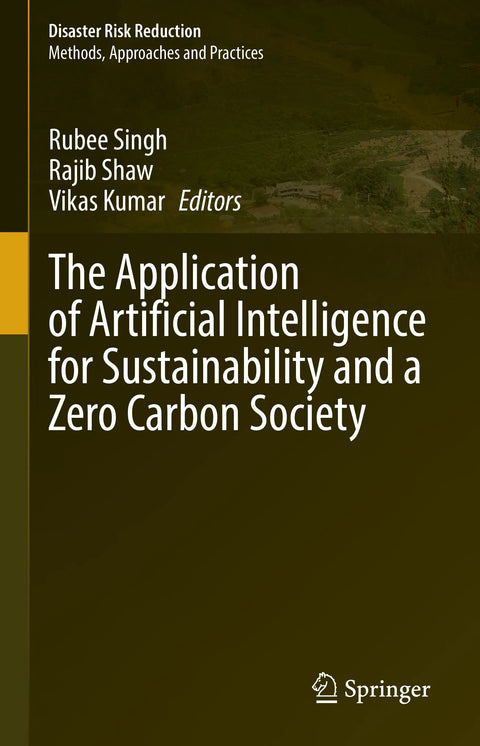
The Application of Artificial Intelligence for Sustainability and a Zero Carbon Society

€171,19

This book explores the transformative role of artificial intelligence (AI) in achieving the zero-carbon industry targets, as set by the Paris Agreement on climate change. It provides a comprehensive overview of how AI can be applied across sectors such as energy, transportation, manufacturing, and waste management to decarbonize industrial activities and promote sustainability. The volume also provides a comprehensive explanation, roadmap, and analysis of tactics and technological advancements. The book contributes to propel both developed and developing countries towards net zero societies, aligning themselves with the United Nations' urgent call to reduce carbon emissions and meet the goal of creating a more sustainable planet.

Focusing on the critical areas of emissions reduction, sustainable supply chains, and sustainability, the book offers practical insights for researchers, industry professionals, and students. By examining AI's ability to predict climate change consequences, optimize energy use, and forecast emissions from non-renewable energy sources, the book highlights innovative solutions for creating a resilient and sustainable industrial ecosystem in net zero economy.

The book consists of three parts, focusing on the application of AI in enhancing sustainability efforts, the critical role of human capital in driving the zero-carbon transition, and the integration of AI with key performance indicators for sustainable business practices. The volume also explores the necessary global policies, financial incentives, and international collaborations required to accelerate the zero-carbon transformation, offering actionable strategies for a wide array of industries. This book is a valuable resource for anyone involved in AI, sustainability, climate change, and zero-carbon strategies by providing valuable insights into how AI can address climate change challenges while fostering environmental sustainability.

Zum Buch