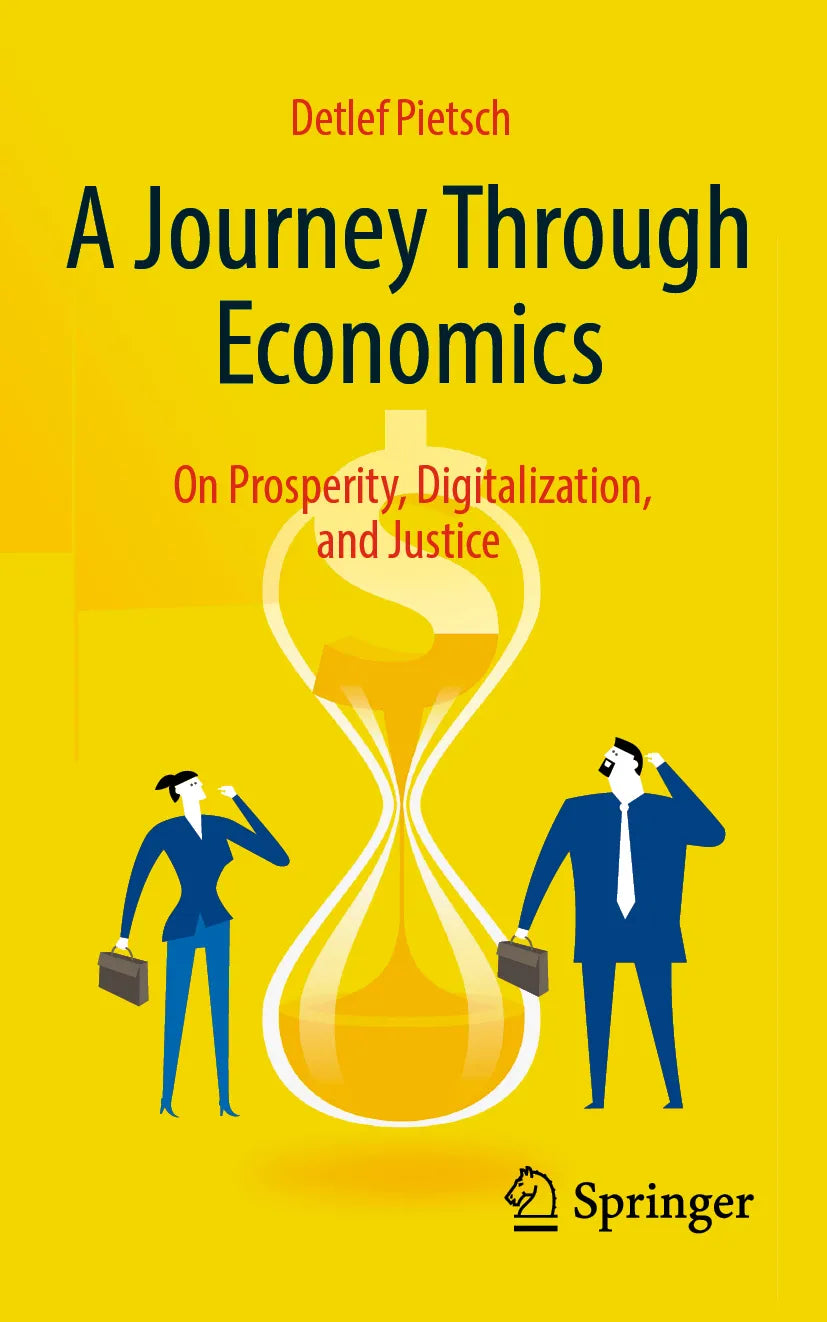
Das Ende des Wohlstands?

Über ökologische und ökonomische Krisen
Angebot€19,99
inkl. MwSt. • Kein physischer Versand
Sofort per Download lieferbar
Ihr Downloadlink kommt direkt per E-Mail.
PDF: lesbar auf Smartphone, Tablet, Computer und in vielen PDF-Apps.

E-Book
eBook-Format:PDF
14 Tage Widerrufsrecht
Sicher bezahlen – auch auf Rechnung mit Klarna
PayPal Klarna Visa Mastercard Maestro Apple Pay Google Pay
Inhaltsangabe

1. Unsere ökonomische Zukunft ist unsicherer denn je.- 2. Unvorhergesehene Pandemien.- 3. Internationale Konflikte und deren ökonomische Auswirkungen.- 4. Klimakatastrophe ohne wirksame Gegenmaßnahmen.- 5. Die soziale Frage und die Rolle des Staates.- 6. Künftige Entwicklungen der Globalisierung und Digitalisierung.- 7. Wohlstand in Krisenzeiten.

Produktdetails
  • Erscheinungsdatum: 13.01.2025
  • Autor/Autorin: Detlef Pietsch
  • Reihe: Business and Economics (German Language)
  • Format: E-Book
  • Dateiformat: PDF
  • Kopierschutz: Wasserzeichen
  • Dateigröße: 1.3 MB
  • Auflage: 2. Auflage 2025
  • Verlag: SPRINGER
  • Sprache: Deutsch
  • Umfang: 200 Seiten
  • ISBN: 9783658462437
  • Lieferung: Sofort per Download
  • Hinweis: Sofort per Download lieferbar. Kein physischer Versand.
  • Kompatibilität: Lesbar auf Geräten und Apps mit PDF-Unterstützung.
Herstellerinformationen
Springer Nature Customer Service Center GmbH

Email: ProductSafety@springernature.com

Weitere E-Books von Detlef Pietsch

The Anti-Capitalist Society

€53,49

Over the past decades, capitalism has undeniably brought about tremendous prosperity. So why—this being the central question of the book—is capitalism repeatedly called into question, and in some cases, even fiercely opposed? Critics argue that capitalism is the root cause of social injustice, rising poverty, and the climate crisis. They claim that capitalism, by its very nature, depends on infinite growth—something that is no longer viable in a world of finite resources. Capitalist competition, they say, fosters a selfish, cutthroat society instead of the solidarity that is urgently needed. Many in the younger generation, in particular, are increasingly disillusioned with capitalism.

This book explores the reasons behind the shift toward a capitalism-critical society and outlines possible paths toward a reformed capitalism—one that is more social, ecological, and values-driven.

Zum Buch
1 / 4