Teil der Reihe: Law and Criminology (R0)

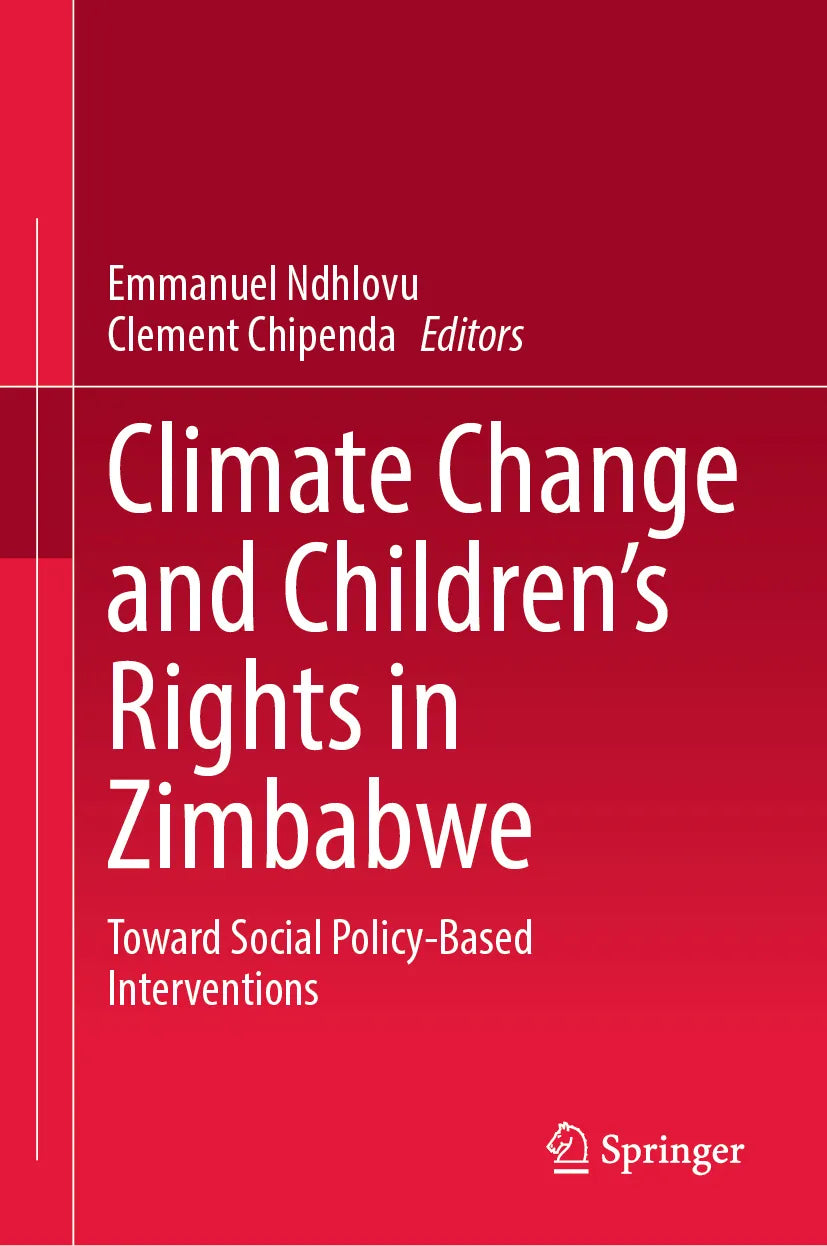
Climate Change and Children's Rights in Zimbabwe

Toward Social Policy-Based Interventions
Angebot€149,79
inkl. MwSt. • Kein physischer Versand
Sofort per Download lieferbar
Ihr Downloadlink kommt direkt per E-Mail.
PDF: lesbar auf Smartphone, Tablet, Computer und in vielen PDF-Apps.

E-Book
eBook-Format:PDF
✓14 Tage Widerrufsrecht
✓Sicher bezahlen – auch auf Rechnung mit Klarna
PayPal Klarna Visa Mastercard Maestro Apple Pay Google Pay
Inhaltsangabe

This volume, Climate Change and Children's Rights in Zimbabwe: Toward Social Policy-Based Interventions, provides a comprehensive examination of the intersection between climate change and children's rights in Zimbabwe, one of the world's most climate-vulnerable nations. It brings together diverse perspectives from sociology, law, development studies, anthropology, economics, and environmental sciences to challenge conventional approaches that treat children as passive victims of climate impacts. The book interrogates climate vulnerability through multiple dimensions, from legal frameworks and theoretical foundations to sectoral impacts and innovative adaptation strategies, showcasing transformative pathways for child-centred climate action that recognises children as rights-holders and active agents of change.\

The book outlines critical aspects and issues that must be understood and addressed to protect and advance children's rights in the face of accelerating environmental change. Attention is given to both persistent structural inequalities and innovative opportunities for building resilience through rights-based, gender-transformative, and community-grounded approaches. Through case studies spanning diverse districts, including Lupane, Bikita, Mbire, Chivi, Mashonaland Central, Gutu, Goromonzi, Zvimba, and others, it highlights how climate impacts manifest differently across Zimbabwe's varied ecological and socio-economic landscapes, affecting children's health, education, nutrition, protection, and overall well-being. It provides foundational perspectives into climate justice imperatives, multispecies justice frameworks, legal and policy gaps, and opportunities for transformative social policy that centres children's agency and Indigenous knowledge systems. The book is of interest to researchers, climate justice scholars, child rights advocates, development practitioners, humanitarian organisations, and policymakers committed to implementing more effective, equitable, and contextually appropriate climate responses that place children's rights at the centre of all climate action across Zimbabwe and the broader African continent.


Produktdetails
  • Erscheinungsdatum: 14.02.2026
  • Autor/Autorin: Emmanuel Ndhlovu
  • Reihe: Law and Criminology (R0)
  • Format: E-Book
  • Dateiformat: PDF
  • Kopierschutz: Wasserzeichen
  • Dateigröße: 8.9 MB
  • Verlag: SPRINGER
  • Sprache: Englisch
  • Umfang: 361 Seiten
  • ISBN: 9789819560059
  • Lieferung: Sofort per Download
  • Hinweis: Sofort per Download lieferbar. Kein physischer Versand.
  • Kompatibilität: Lesbar auf Geräten und Apps mit PDF-Unterstützung.
Herstellerinformationen
Springer Nature Customer Service Center GmbH

Email: ProductSafety@springernature.com

Weitere E-Books von Emmanuel Ndhlovu

Agriculture, Autonomous Development, and Prospects for Industrialization in Africa

€160,49

The book investigates the intersection of agriculture and development in Africa and how it impacts rural industrialisation prospects. It provides a comprehensive view of the position of agriculture in African socio-economic activities and the agricultural sector's potential as the source for continental development and industrialisation prospects. Significant research has been done on African development with a focus placed on the problematic role played by slavery, colonialism and later by incompetent African leaders who failed to steer development of the type that delivers a progressive, sustained and sustainable transformation of lives and societies. There is limited focus on the possibility of agriculture being the potential basis of African development and the chance for industrialisation. This is a matter of concern, considering the dominance of agriculture as a livelihood and income source for many people on the continent. 

In contributing to the debate on development in Africa, this book aims to show how agriculture can serve as the basis for African development and industrialisation. This will be achieved by (i) providing a detailed historical description of the position of agriculture in African socio-economic activities, (ii) outlining the trajectory of African development with a focus on agriculture, innovation, and mechanisation, (iii) identifying challenges to the development of African agriculture, (iv) exploring the opportunities for agricultural development in Africa, and (v) providing practical and policy recommendations to improve African agriculture and make it the engine for development and industrialisation. 

Utilising a multidisciplinary approach which combines political economy, social policy, financial inclusion, and empowerment approaches, the book also shows how engagement of youth and women, digitalisation, and the provision of support (by public and private actors) can jump-start agriculture as the engine of African development and industrialisation. Taken together with this conscious effort to promote a multi-disciplinary discussion, the book is valuable reading for students, policymakers, and activists interested in emerging new directions in African development thinking and research.

Zum Buch