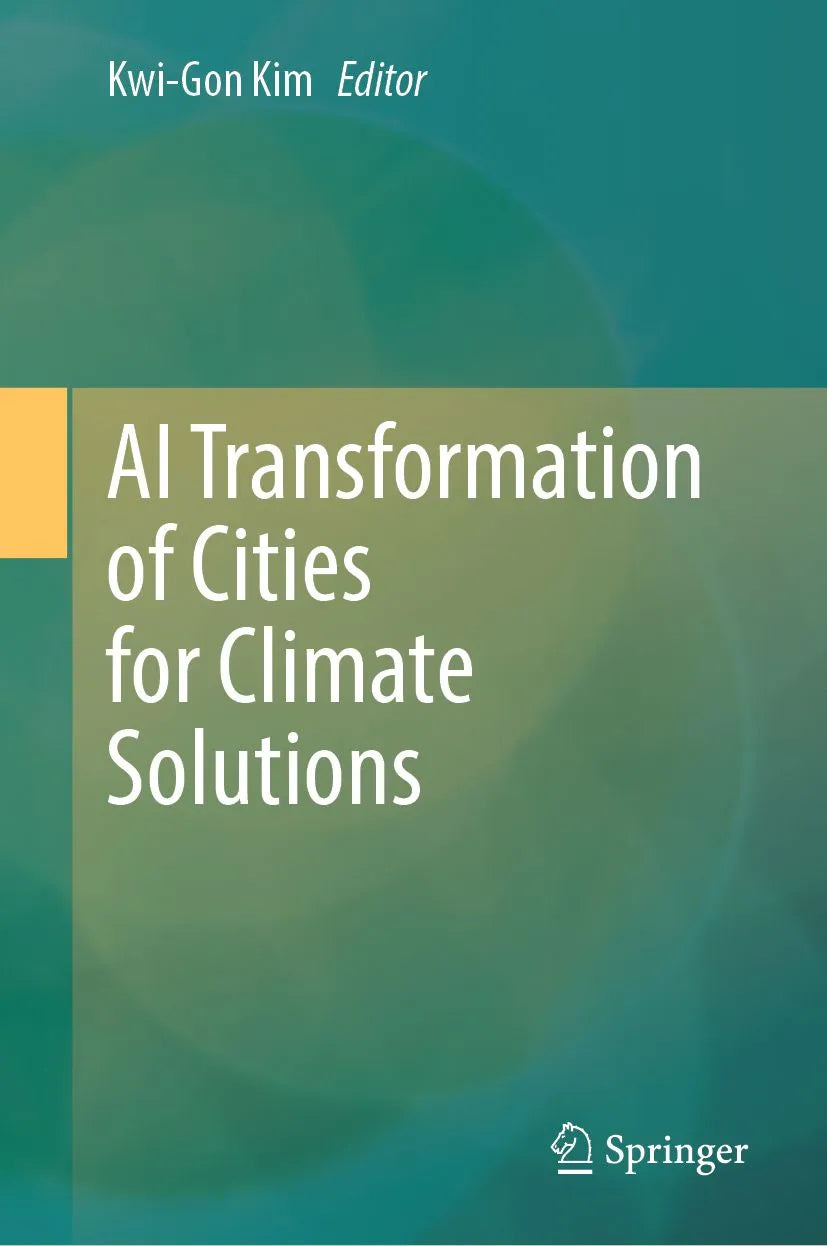
AI Transformation of Cities for Climate Solutions

Angebot€181,89
inkl. MwSt. • Kein physischer Versand
Sofort per Download lieferbar
Ihr Downloadlink kommt direkt per E-Mail.
PDF: lesbar auf Smartphone, Tablet, Computer und in vielen PDF-Apps.

E-Book
eBook-Format:PDF
14 Tage Widerrufsrecht
Sicher bezahlen – auch auf Rechnung mit Klarna
PayPal Klarna Visa Mastercard Maestro Apple Pay Google Pay
Inhaltsangabe

Potential of AI for Promoting Smart and Sustainable Eco-city Solutions to Climate Change: Sustainability and AI nexus for AI city climate planning.- Emergence of an AI New Urbanism as a Synthesis Science where AI meets Cities: AI optimism for data-driven city climate planning.- Framework for Combining AI with the Life Cycle Process of Urban Planning and Development Processes as a Whole: A paradigm shift.- AI Agents.- AL Modeling Methods, Tools and Techniques: Theoretical combination of AI and city climate planning for soft computing techniques.- A Practical Illustration of AI in Prediction and Optimization Process (graph-based and mathematical modeling): Delivery of end- to -end solutions from concept and design to deployment, image and support.- AI Urban Innovation Ecosystem Strategies for City and Community-Based AI Transformation.- Action Plan for Implementation of AI Transformation in  Cities: Climate action in motion at AI cities.- Current AI Research on Cities for AI Innovation.- AI Creative Destruction Technologies: Evidence form the practices.- AI Converged Startups and Business Opportunities: Fostering AI marketing and and dynamic AI startup ecosystems for climate.- AI Virtual City Proposals for Sustainability: AI imaging technologies including virtual twin.- Applying AI in the Urban Context to Scale Green Finance and Carbon Markets for Sustainable Urban Development.- Proposal on the Case Study of AI Eco-Cultural Tourism in the Song Dam Lake and its Surrounding Area.- Why African Cities need to Adopt/Integrate AI into their Urban Planning Processes.- Scientific Insights for AI-Based Urbanism towards an Architect of City Climate Planning: A scientific assessment.- Examples of Scientific and Practical Questions and AI R & D Topics.

Produktdetails
  • Erscheinungsdatum: 22.06.2026
  • Autor/Autorin: Kwi-Gon Kim
  • Reihe: Earth and Environmental Science (R0)
  • Format: E-Book
  • Dateiformat: PDF
  • Kopierschutz: Wasserzeichen
  • Dateigröße: 33.7 MB
  • Verlag: SPRINGER
  • Sprache: Englisch
  • Umfang: 297 Seiten
  • ISBN: 9783032219404
  • Lieferung: Sofort per Download
  • Hinweis: Sofort per Download lieferbar. Kein physischer Versand.
  • Kompatibilität: Lesbar auf Geräten und Apps mit PDF-Unterstützung.
Darum lohnt sich dieses Buch

Excellent AI examples in the city climate context using a step-by- step format New concepts of AI urbanism and synthesis science, and citizen science Connection of climate action at all levels to bridge local action with national climate plans and global goals

Herstellerinformationen
Springer Nature Customer Service Center GmbH

Email: ProductSafety@springernature.com

Weitere E-Books von Kwi-Gon Kim

LCA and Consumption/Needs-Based GHG Accounting for Climate Action

€181,89

This book reveals causes of the GHG emission accounting practice failure over the last several decades, describes evolution of new tenets of the accounting and remaining tasks, and suggests a new comprehensive integrated accounting in the form of protocol.

The latest Intergovernmental Panel on Climate Change (IPCC) assessment report calls for net zero CO2 emissions by 2050 to limit warming to 1.5 degree C. As a result, many countries, cities, and industries are putting forward their greenhouse gas (GHG) emission reduction actions and commitments. But can the countries, cities, and industries meet these ambitious decarbonization goals without a reliable GHG inventory? This book tries to answer this question.

It has been argued that there is a need to include LCA and consumption/needs-based GHG emissions as a complimentary indicator to the current approach of production-based GHG accounting emissions. As a shifting of the focus of accounting system after the Paris Agreement, consumption/needs-based approach is newly focused on a more broader accounting approach for NDCs and LDCs with a vision of all of society approach. Traditional national inventory approach to GHG emission accounting has been severely criticized as being too production process-oriented, sector-based approach, less transparent, a lack of public participation, no considerations for human needs and human factors.


 

Zum Buch