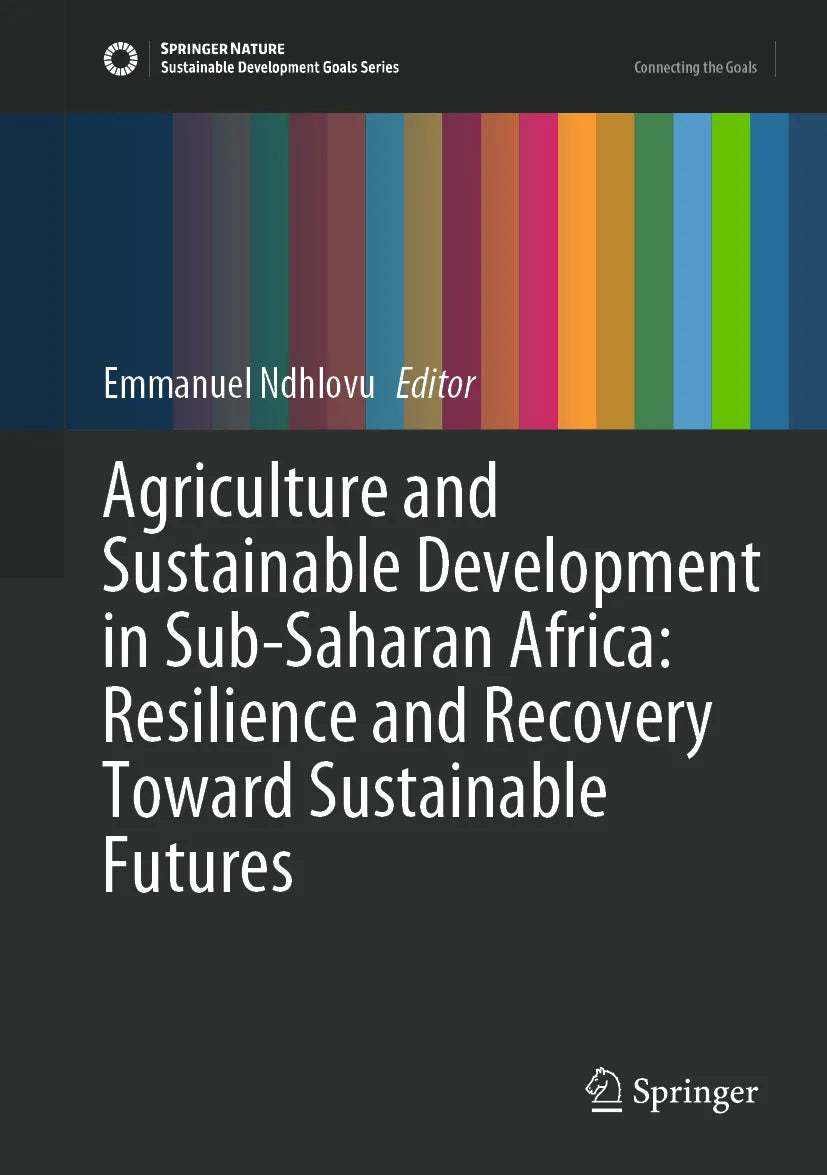
Agriculture and Sustainable Development in Sub-Saharan Africa: Resilience and Recovery Toward Sustainable Futures

Angebot€213,99
inkl. MwSt. • Kein physischer Versand
Sofort per Download lieferbar
Ihr Downloadlink kommt direkt per E-Mail.
PDF: lesbar auf Smartphone, Tablet, Computer und in vielen PDF-Apps.

E-Book
eBook-Format:PDF
✓14 Tage Widerrufsrecht
✓Sicher bezahlen – auch auf Rechnung mit Klarna
PayPal Klarna Visa Mastercard Maestro Apple Pay Google Pay
Inhaltsangabe

Chapter 1. Introduction: Rethinking African Agriculture: Pathways to Resilience, Recovery, and Sustainable Transformation.- Chapter 2. Africa’s Food Systems: A Sub-Regional Comparative Analysis of Conditions, Challenges, and Opportunities.- Chapter 3. Agriculture and Food (In)Security in East Africa: A Critical Gendered Analysis.- Chapter 4. Agriculture and Food Systems in Southern Africa: Experiences and Lessons.- Chapter 5. Agriculture and Food Systems in Central Africa: Condition and Prospects for Transformation.- Chapter 6. Financial Development, Urbanisation, and Food Production in the Economic Community of West African States.- Chapter 7. (In)formal Markets Agri-food Value Chains in Sub-Saharan Africa.- Chapter 8. A Review of the State of Food Security in East Africa.- Chapter 9. Technology, Energy and Transport Inefficiencies in West Africa’s Smallholder Farms: Implications for Socio-economic Development and Food Security.- Chapter 10. Food Imports and the Growing Debt Burden in Sub-Saharan Africa.- Chapter 11. Impact of Climate Change on African Food Systems: A systematic review Incorporating Strategies for enhancing sustainable Wild Food Utilisation.- Chapter 12. The Role of Surplus Food Recovery in Tackling Food Loss and Waste and Hunger in Sub-Saharan Africa.- Chapter 13. Sub-Saharan Africa’s Youths as Change agents for Sustainable Food system Transformation: Evidence, Challenges and Opportunities.- chapter 14. An Overview of Agricultural and Food Systems Digital Initiatives in Sub-Saharan Africa.- Chapter 15. Advancing Sustainable Food Processing for Resilient and Inclusive Food Systems in Africa: Strategies, Challenges and Opportunities.- Chapter 16. Harnessing Indigenous Knowledge and Modern Technology for Resilient Food production in Dryland Countries.- Chapter 17. Empowering Women in African Food Systems: A Pathway to Enhanced Food Security and Community Well-Being.- Chapter 18. Innovation Pathways for Food System Transformation in Southern Africa: Three Countries at Different Development Stages.- Chapter 19. Exploring the Potential of Marginalised Small Grains for Achieving Food Security under Climate Change.- Exploring the Beverage Politics in Southern Africa’s Food Systems.- Chapter 21. Challenges hindering the production of food crops in community gardens in Jozini Local Municipality of South Africa.- Chapter 22. Sorghum production systems and farmers’ trait preferences in dryland areas of Zimbabwe: Implications for local food systems.- Chapter 23. Feasts, foodways, and community resilience: Recasting communal feasting as food security intervention in Maseru Central, Lesotho.- Chapter 24. Conclusion: African Governments’ Policies and Interventions for Regional Agriculture and Food System Transformation.

Produktdetails
  • Erscheinungsdatum: 25.01.2026
  • Autor/Autorin: Emmanuel Ndhlovu
  • Reihe: Earth and Environmental Science (R0)
  • Format: E-Book
  • Dateiformat: PDF
  • Kopierschutz: Wasserzeichen
  • Dateigröße: 12.4 MB
  • Verlag: SPRINGER
  • Sprache: Englisch
  • Umfang: 403 Seiten
  • ISBN: 9783032098818
  • Lieferung: Sofort per Download
  • Hinweis: Sofort per Download lieferbar. Kein physischer Versand.
  • Kompatibilität: Lesbar auf Geräten und Apps mit PDF-Unterstützung.
Herstellerinformationen
Springer Nature Customer Service Center GmbH

Email: ProductSafety@springernature.com

Weitere E-Books von Emmanuel Ndhlovu

Agriculture, Autonomous Development, and Prospects for Industrialization in Africa

€160,49

The book investigates the intersection of agriculture and development in Africa and how it impacts rural industrialisation prospects. It provides a comprehensive view of the position of agriculture in African socio-economic activities and the agricultural sector's potential as the source for continental development and industrialisation prospects. Significant research has been done on African development with a focus placed on the problematic role played by slavery, colonialism and later by incompetent African leaders who failed to steer development of the type that delivers a progressive, sustained and sustainable transformation of lives and societies. There is limited focus on the possibility of agriculture being the potential basis of African development and the chance for industrialisation. This is a matter of concern, considering the dominance of agriculture as a livelihood and income source for many people on the continent. 

In contributing to the debate on development in Africa, this book aims to show how agriculture can serve as the basis for African development and industrialisation. This will be achieved by (i) providing a detailed historical description of the position of agriculture in African socio-economic activities, (ii) outlining the trajectory of African development with a focus on agriculture, innovation, and mechanisation, (iii) identifying challenges to the development of African agriculture, (iv) exploring the opportunities for agricultural development in Africa, and (v) providing practical and policy recommendations to improve African agriculture and make it the engine for development and industrialisation. 

Utilising a multidisciplinary approach which combines political economy, social policy, financial inclusion, and empowerment approaches, the book also shows how engagement of youth and women, digitalisation, and the provision of support (by public and private actors) can jump-start agriculture as the engine of African development and industrialisation. Taken together with this conscious effort to promote a multi-disciplinary discussion, the book is valuable reading for students, policymakers, and activists interested in emerging new directions in African development thinking and research.

Zum Buch