

Sarah Bornemann
Sarah Bornemann, born in Bremervörde in 1992, studied electrical engineering with a focus on microelectronics and microsystems at the University of Bremen and obtained her Master of Science degree in 2019. The topic of her thesis was the conceptual development of a battery management system for solid-state car batteries, which were still subject of research at that time. During her master’s studies, she worked as a student assistant at the Fraunhofer Institute for Manufacturing Technology and Advanced Materials (IFAM) in Bremen in the department of Electromobility. In February 2020, she joined the Institute for Microsensors, actuators, and systems (IMSAS) in Bremen, working on her Ph.D. within the framework of the DFG-funded research unit FOR 3022. Her research interests include electronics development, both in hardware and software, the integration of sensors and sensor electronics into rigid and flexible materials, wireless interfaces, and microsensors.
 Erschienen am 23.01.2025
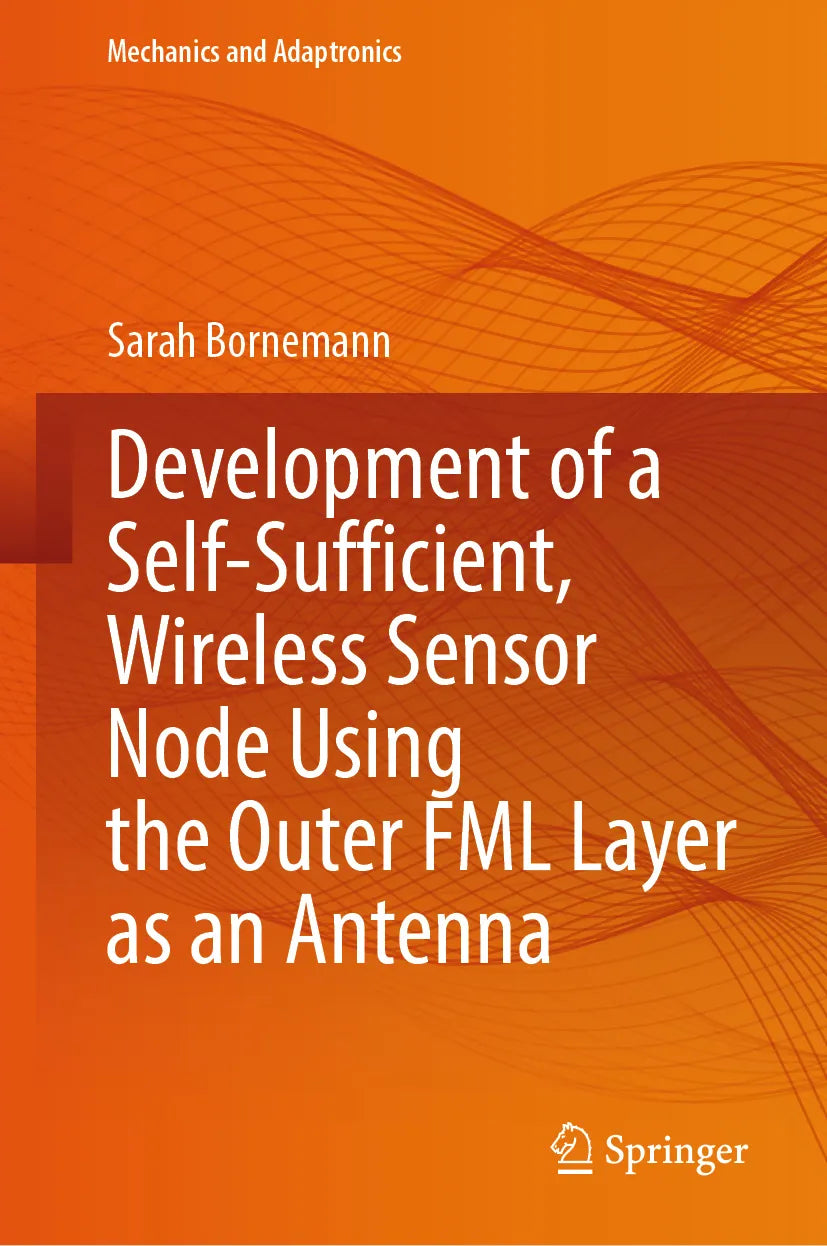
Development of a Self-Sufficient, Wireless Sensor Node Using the Outer FML Layer as an Antenna
E-Book
€181,89
Filter
1 Produkt
Aus denselben Regalen
Ähnliche Autorinnen und Autoren
Wer Sarah Bornemann liest, findet hier Autorinnen und Autoren aus Technik.
- Artur ZaporozhetsTechnik
- Frank GustrauTechnik
- M. Shamim KaiserTechnik
- Maximilian KockTechnik
- Werner SchreiberTechnik
- Horst-W. GrolliusTechnik
- Albert C. J. LuoTechnik
- Alexander Arnfinn OlsenTechnik